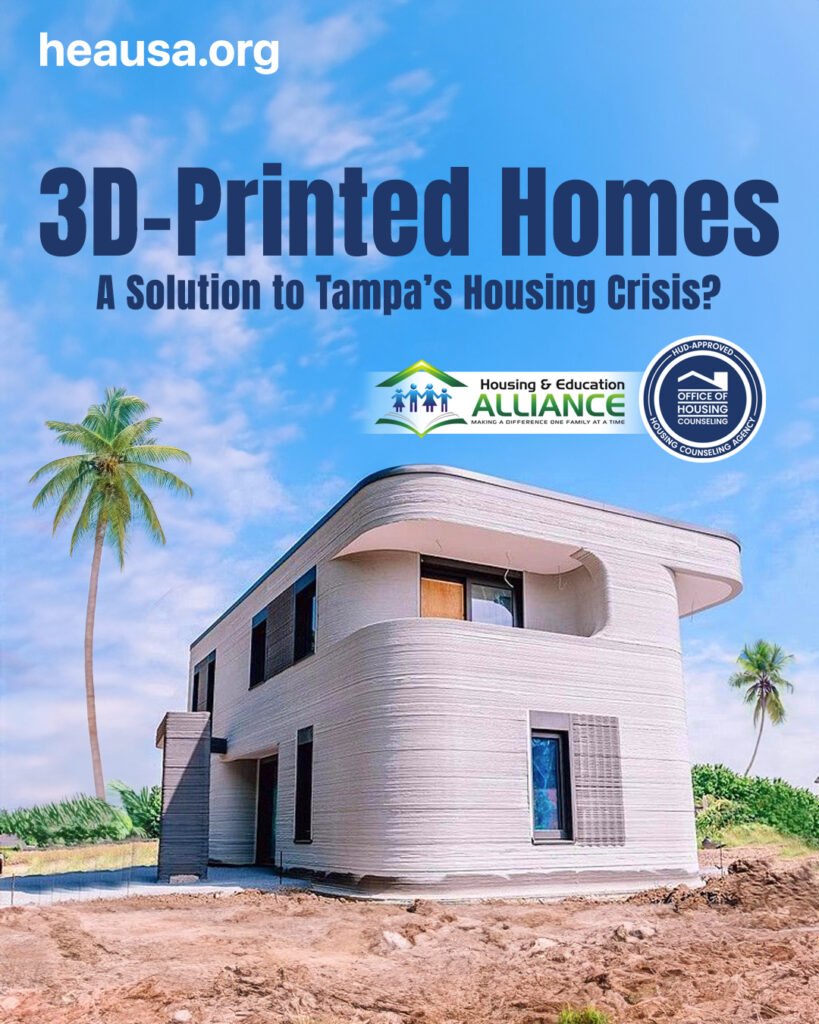
3D Printed Houses: The Solution to the Housing Crisis?
Look, let’s cut to the chase. We’ve got a massive problem on our hands. Housing prices are through the roof, rents are insane, and finding a decent place to live feels like wiing the lottery. It’s not just a headache; it’s a full-blown crisis affecting millions. Everyone’s talking about it, from politicians to your grandma, but what’s the actual fix? Well, some folks are pointing to a futuristic-sounding solution that’s actually becoming a reality: 3D printed houses.
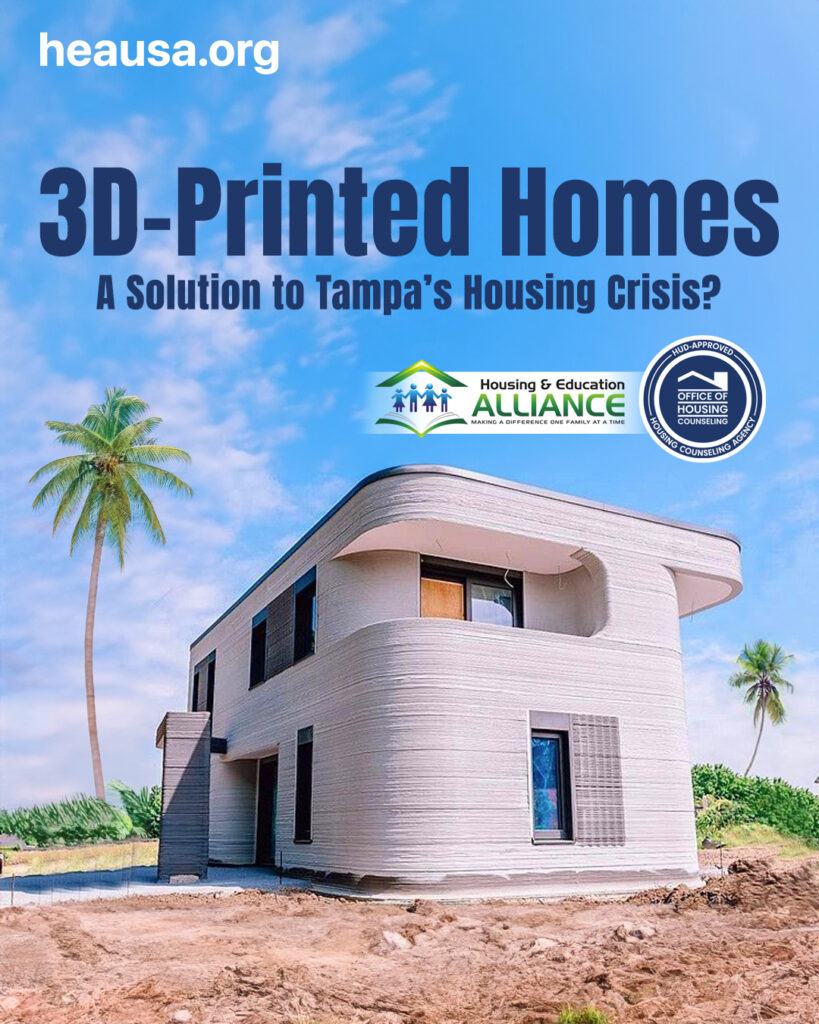
Source : heausa.org
Yeah, you heard that right. We’re talking about giant 3D printers spitting out walls, foundations, and entire homes, layer by layer. Is this just some sci-fi fantasy, or could it really be the answer we’ve been desperately searching for? Let’s dig in.
The Housing Nightmare is Real
You see it everywhere. The “For Sale” signs are few and far between, and when they do pop up, the price tags are astronomical. A lot of this boils down to simple supply and demand, but it’s way more complicated than that. Decades of underbuilding, zoning laws that make zero sense, and the rising cost of traditional construction materials and labor have created a perfect storm. It’s gotten so bad that young families can’t afford to buy a home, and even renting is becoming a luxury many can’t handle. This isn’t just an economic issue; it’s a social one, impacting stability, community, and opportunity.
Think about the folks who are really getting squeezed: essential workers, young professionals trying to get a foothold, even families who’ve lived in an area for generations but can no longer afford to stay. It’s a tough situation, and frankly, the old ways of building aren’t keeping up. We need something different. Something faster. Something cheaper. Something that can actually scale to meet the demand.
Enter the Giant Printer: How Does This Even Work?
Source : context.news
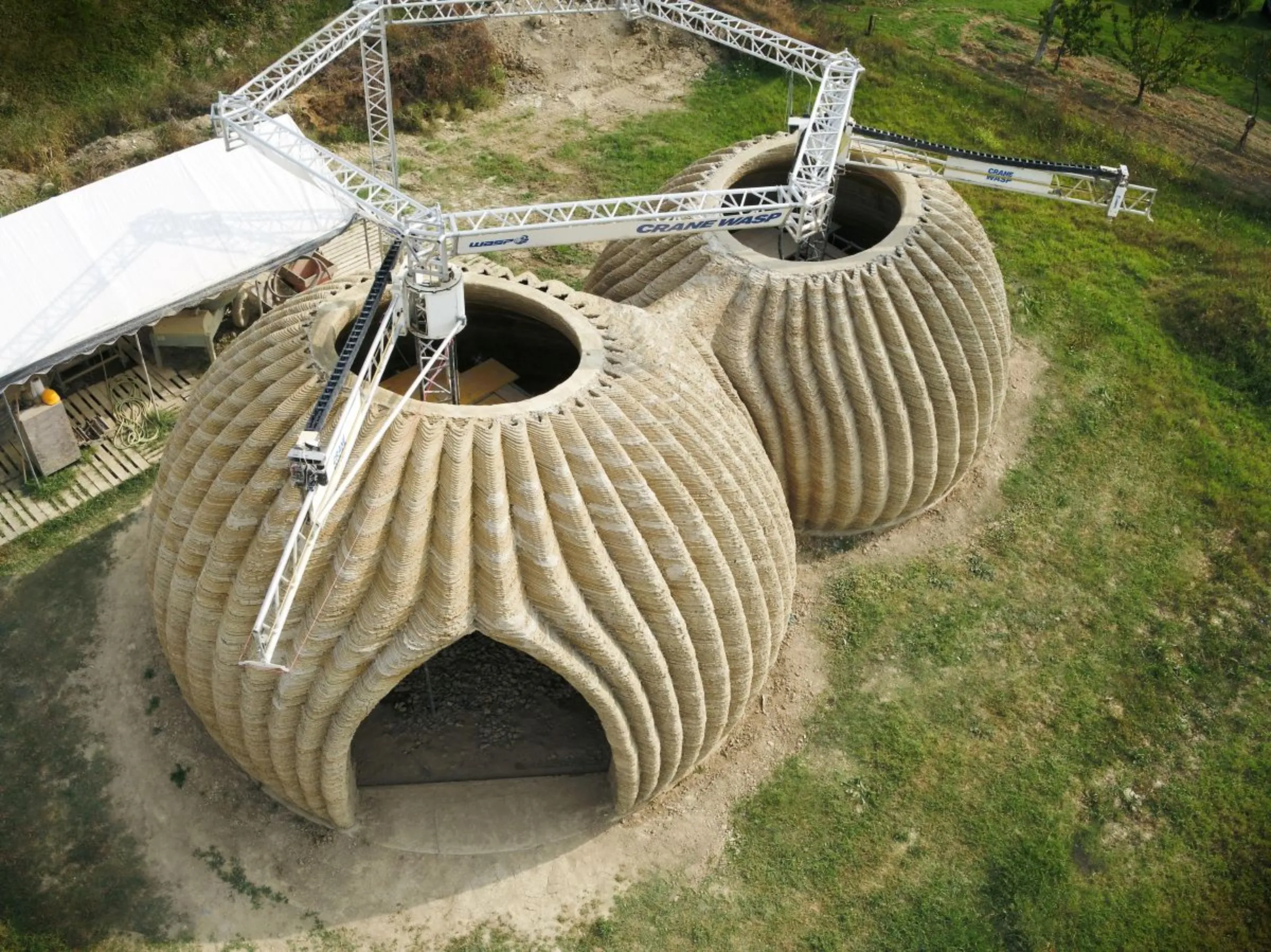
Okay, so picture this: instead of workers with hammers and nails, you’ve got a massive robotic arm on a track system. It’s armed with a special nozzle, kind of like a giant caulk gun, but instead of caulk, it’s extruding a concrete-like mixture. This stuff, often called a cementitious material or geopolymer, is specifically designed to be printable and cure quickly. The printer follows a digital blueprint, laying down the material layer by painstaking layer, building up the walls, and sometimes even structural elements, right on the foundation.
It’s pretty wild to watch. Within a day or two, you can have the basic structure of a home printed. Of course, it’s not like you just move in then. You still need a roof, windows, doors, plumbing, and electrical work. But the core shell? That’s done with incredible speed compared to traditional methods. This technology is rapidly moving from experiment to reality, with builders deploying 3D-printing at scale.
Why 3D Printing is a Game-Changer for Construction
Let’s talk about the real advantages here, because there are quite a few. First off: Speed. Remember how I said it takes days? Traditional home building can take months, sometimes even longer, especially if there are delays with permits, materials, or weather. A 3D printer doesn’t care about a little rain (within reason) and can work around the clock. This dramatically cuts down on construction time.
Then there’s the cost factor. While the initial investment in a large-scale 3D printer isn’t cheap, the long-term savings can be huge. You need fewer laborers on-site, reducing labor costs significantly. Plus, the material waste is drastically cut down because the printer only uses what it needs, precisely where it needs it. Imagine the savings on materials like lumber and concrete! This could lead to genuinely affordable housing options.
Design flexibility is another huge win. With a 3D printer, you’re not limited to basic rectangular boxes. You can create curved walls, unique architectural features, and complex geometries that would be incredibly expensive, if not impossible, with traditional construction. It opens up a world of possibilities for architects and designers.
And let’s not forget sustainability. Less material waste means a smaller environmental footprint. Some companies are even experimenting with using recycled materials or more eco-friendly concrete mixes. It’s all about building smarter and greener, and 3D printing is right there.
But Is It Really a Solution? The Challenges Ahead

Source : ideastream.org
Okay, so it sounds pretty great, right? But before we all start dreaming of our custom-printed dream homes, we need to pump the brakes a little. It’s not all smooth sailing. One of the biggest hurdles is regulations and building codes. Many existing codes were written for traditional construction methods and haven’t quite caught up with this new technology. Getting permits and approvals can be a slow, bureaucratic nightmare. It’s a classic case of old rules trying to fit new tech.
Then there’s the perception. Some people just aren’t convinced. They hear “3D printed house” and picture a flimsy, cheap-looking structure. Building trust and acceptance in the market takes time. People need to see these homes standing strong for years, weathering storms, and proving their durability. It’s about shifting mindsets.
We also need to consider the supply chain for these specialized printing materials. While concrete is common, the specific mixes required for 3D printing might not be as readily available everywhere. Scaling up production and distribution is key. And let’s be real, while it reduces labor needs, you still need skilled technicians to operate and maintain these complex machines. It’s not like anyone can just jump on and start printing a house.
Finally, the initial cost of the printing equipment itself is substantial. This might limit its adoption to larger construction companies or developers who can afford the upfront investment. How do we make this technology accessible to smaller builders or even individuals? That’s a question we’re still figuring out.
Real-World Examples: Where the Printers Are Rolling
This isn’t just talk. Companies are already building and selling these homes. In places like Austin, Texas, you can find communities featuring 3D printed homes. Companies like ICON are at the forefront, printing homes for everything from affordable housing projects to disaster relief shelters and even homes for Mars (yes, really). They’ve demonstrated that these structures can be built quickly and affordably. It’s not just a theoretical concept anymore; it’s happening now.
Check out places like Florida, where companies are printing homes designed to withstand hurricanes. Or look at developments in communities aiming to provide housing for veterans or low-income families. These projects showcase the versatility and potential of the technology. The momentum is building, and more projects are popping up across the country and globally. It’s exciting to see the iovation happening on the ground, transforming ideas into actual houses.
One fascinating aspect is how this technology is being used to address specific needs. For example, some initiatives are focused on providing rapid housing solutions after natural disasters. When communities are devastated, traditional rebuilding takes too long. 3D printing offers a way to erect basic, safe structures much faster, giving people a place to live while longer-term solutions are put in place. This speed and efficiency could truly be a lifesaver for many.

Source : bostonglobe.com
The Future is Layered: What’s Next for 3D Printed Homes?
So, are 3D printed houses the silver bullet for the housing crisis? Maybe not a magic wand, but they are absolutely a significant part of the solution. The technology is advancing at an incredible pace. We’re seeing printers get faster, materials get stronger and more sustainable, and the integration of traditional finishing trades becoming more streamlined. Expect to see more experimentation with different materials, like hempcrete, which offers good insulation and is environmentally friendly.
The key will be continued iovation, supportive regulations, and a willingness from the public to embrace this new way of building. As the costs come down and more successful projects are completed, the skepticism will likely fade, replaced by excitement about the possibilities. It’s a journey, for sure, but one that’s already well underway. We’re talking about a future where building a home could be as simple as printing a document – albeit a very, very large and permanent one.
Imagine a world where construction is less about back-breaking labor and more about smart technology. Where homes can be built in weeks, not months, and at a price point that makes sense for average people. That’s the promise of 3D printed construction. It’s not just about building houses; it’s about building a more accessible, sustainable, and equitable future. And honestly? That’s a future worth printing.
Frequently Asked Questions About 3D Printed Homes
Are 3D printed homes safe and durable?
Absolutely. The materials used are typically strong concrete mixes designed to meet or exceed building codes. Companies are rigorously testing these structures for everything from fire resistance to extreme weather. Think of them as concrete homes, just built in a different way. Many are designed to be more durable than traditional wood-frame houses, especially against things like high winds and pests.
Are 3D printed homes cheaper than traditional homes?
Potentially, yes. The main cost savings come from reduced labor and less material waste. While the initial printer setup is expensive, the ongoing cost per house can be significantly lower. This is crucial for making affordable housing a reality. It’s not always cheaper today, but the trend is definitely heading that way as the tech matures.
How long does it take to build a 3D printed house?
The printing of the walls and basic structure can happen incredibly fast – sometimes in just 24 to 48 hours! Of course, you still need to add the roof, windows, doors, and all the interior work (plumbing, electrical, etc.), which takes additional time. But the core shell being up so quickly is a massive time-saver compared to traditional building methods.
Are 3D printed homes environmentally friendly?
They can be. A big advantage is the significant reduction in material waste compared to traditional construction. Plus, companies are exploring eco-friendly concrete alternatives and optimizing designs to use less material overall. The potential for a lower carbon footprint is definitely there, making them a more sustainable option.
Which states allow 3D printed homes?
More and more states are approving and even encouraging the use of 3D printed homes. Places like Texas, Florida, and California have seen significant projects take off. As the technology proves itself and building codes adapt, you’ll see acceptance grow nationwide. It’s becoming increasingly legal to build them across the US.