What Space Tourism Tickets Will Actually Cost in 2030
Look, let’s cut the BS. You want to know if you’ll be sipping champagne on the moon by 2030, or if it’ll still be a fantasy reserved for billionaires. The truth? It’s complicated. But here’s the lowdown, straight from someone who’s been watching this space race heat up: by 2030, space tourism won’t be quite the everyday thing some headlines suggest. Think less ‘family road trip to Mars’ and more ‘exclusive, once-in-a-lifetime splurge for the well-heeled.’ Still, prices are set to drop enough that it’s not entirely out of reach for more than just a handful of ultra-rich folks. We’re talking about a significant shift, but not a total democratization.
The Price of Admission: Where We Stand Now
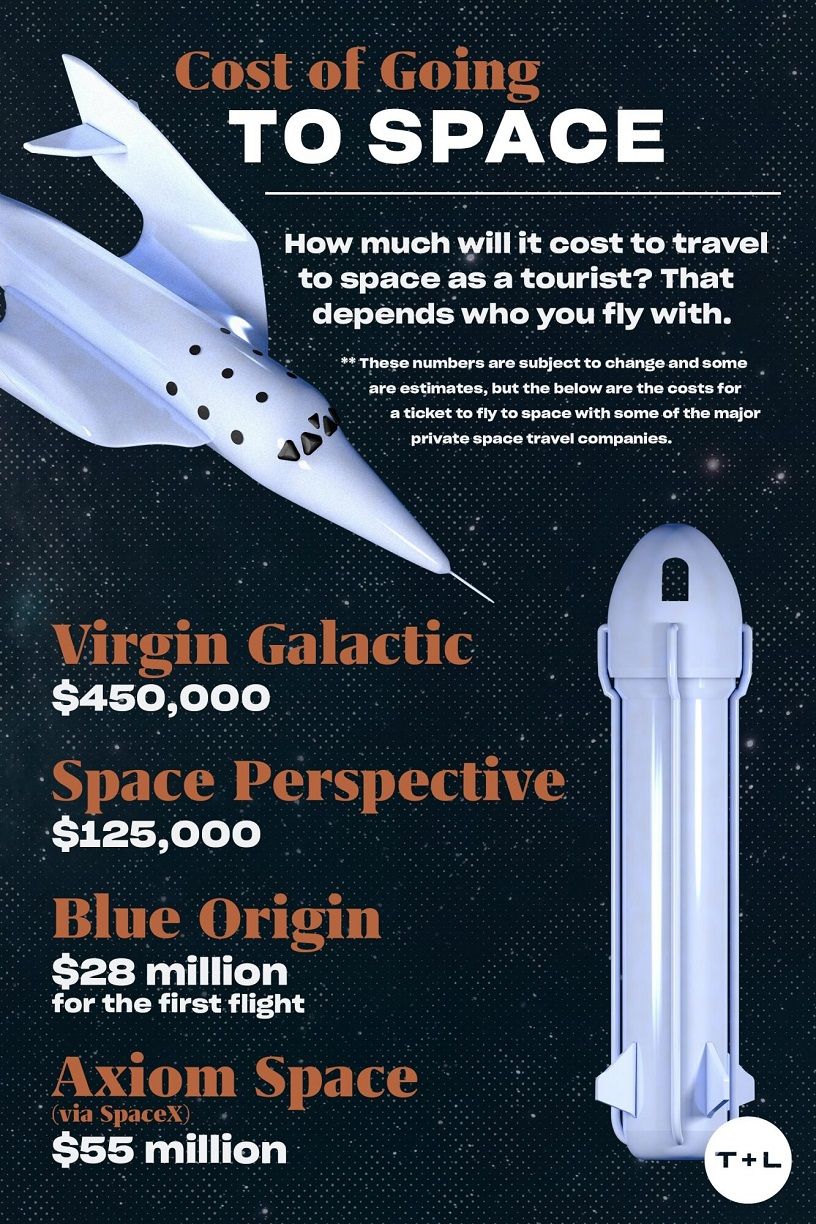
Right now, tickets to space are, frankly, astronomical. Like, ‘sell your house and your car’ kind of money. Virgin Galactic, for instance, has been offering suborbital joyrides that cost a cool $450,000 a seat. Yeah, you read that right. It’s a quick trip to the edge of space, a few minutes of weightlessness, and a killer view – all for the price of a luxury yacht. And they’ve resumed flights, which is big news, but hardly makes it cheap. folks are waiting for their turn. Then you’ve got companies like Blue Origin, who are also in the suborbital game, with prices not much lower. These aren’t casual jaunts; they’re high-stakes adventures for those with serious cash.
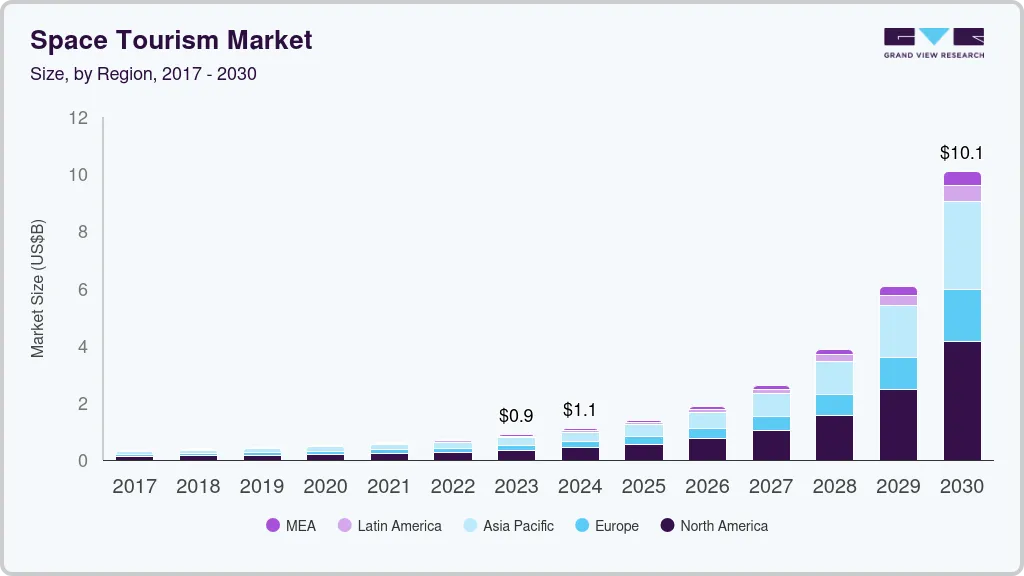
Source : grandviewresearch.com
Orbital trips? Forget about it for most of us. Axiom Space is sending private citizens to the International Space Station, and those tickets? We’re talking tens of millions of dollars. Think $55 million for a week-long stay. It’s less tourism, more ‘extreme luxury expedition.’ This isn’t just about the ticket; it’s about the extensive training, the specialized gear, the risk. It’s a whole package that screams ‘unobtainable’ to 99.9% of the population. This whole industry is still finding its feet, and the reality check is that the initial costs are staggering.
What 2030 Might Actually Look Like
Okay, so what’s the crystal ball say for 2030? We’re not going to see prices plummet to, say, $1,000 like some dreamers predict. That’s just not realistic given the physics, the engineering, and the sheer audacity of launching humans into space. However, expect significant price drops compared to today’s numbers.
For suborbital flights – the quick ‘up and down’ trips that give you a taste of space – I’d put the 2030 price tag somewhere in the $100,000 to $250,000 range. Maybe even a bit lower if competition really heats up and new, more efficient launch systems come online. Think of it like the early days of commercial air travel. It was outrageously expensive, then it became more accessible. Space tourism is on that same trajectory, just on a much faster, more expensive curve. Companies are pouring billions into developing reusable rockets and streamlining operations. That’s gotta count for something, right?
Orbital flights? These will still be the premium tier. If you want to spend a week orbiting Earth, docking with a commercial space station (and yes, these are actually being built!), you’re likely looking at $1 million to $5 million. Still a king’s ransom, but a far cry from the $55 million currently on the table. This is where the serious money is, the kind of cash that funds expeditions and scientific research. It’s for the dedicated space enthusiast, the adventurer with a blank check. We’re talking about booking a flight to a place like Orbital Reef or a similar venture.
Source : linkedin.com
The Factors Driving Ticket Prices Down (and Up)
Several things are going to move these numbers. First, reusable rockets. This is the game-changer, the absolute bedrock of making space travel cheaper. When you can launch a rocket, land it, refuel it, and fly it again (like SpaceX’s Starship or Blue Origin’s New Shepard), the per-flight cost drops dramatically. It’s like reusing a taxi instead of buying a new car every single trip. This tech is maturing fast, and by 2030, it’ll be standard operating procedure for most space tourism ventures.
Second, increased competition. Right now, it’s a relatively small club. But as the technology proves itself and the market shows demand, more players will enter the arena. Think of new companies popping up, offering different experiences, different price points. This competition forces iovation and, crucially, price reductions. Everyone wants a piece of the pie, and the only way to get it is to make your offering more attractive – and cheaper – than the next guy’s. We’ll see companies fighting for every customer.
Third, operational efficiency. It’s not just about the rocket; it’s about everything surrounding the launch. Streamlining the training, the logistics, the ground support. Making the whole process smoother and less resource-intensive. Companies are constantly looking for ways to cut costs without cutting corners on safety. Think of it like an airline optimizing its flight paths and turnaround times. Every little bit saved adds up. This includes everything from pre-flight meals to post-flight analysis.
However, don’t forget the rising costs elsewhere. Inflation is a beast. The cost of materials, labor, and energy can fluctuate wildly. A major geopolitical event or a supply chain disruption could easily send prices for everything, including rocket fuel and specialized components, through the roof. Safety regulations are also likely to get stricter as the industry grows, which means more investment in redundant systems and rigorous testing – all adding to the bottom line. So, while the tech is driving costs down, external factors can easily push them back up. It’s a constant tug-of-war.
Beyond the Ticket: What Else Will You Pay For?
The ticket price? That’s just the appetizer. Once you’re in the space tourism business, there are other costs to consider. Training, for one. You can’t just hop on a rocket without some prep. Expect pre-flight training to become more sophisticated, more personalized, and yes, more expensive. We’re not talking months of astronaut boot camp, but several days or even weeks of specialized instruction, simulations, and medical checks. This is crucial for safety, obviously, but it’s also a significant cost center.
Then there’s insurance. Good luck getting comprehensive coverage for a trip to space. Premiums will be sky-high, assuming insurers are even willing to cover private spaceflights. Most likely, you’ll sign a hefty waiver acknowledging the extreme risks involved. This means carrying your own personal risk, which is a cost in itself. Think about the liability involved – it’s enormous.
Source : finance.yahoo.com

What about souvenirs? Or post-flight spa treatments to help you readjust? These ‘add-ons’ might seem minor, but they’ll add up. Imagine custom-made flight suits, personalized mission patches, or even exclusive memorabilia from your trip. Companies will absolutely find ways to monetize every aspect of the experience. It’s a luxury market, after all. Think about the ‘extras’ you get with a high-end car purchase – it’s that kind of thinking, just with much higher stakes.
And let’s not forget the potential for in-space experiences. Want to do a spacewalk? Or perhaps a specific scientific experiment? These premium activities will likely come with their own hefty price tags. Think of it like paying extra for business class on a plane, but on a cosmic scale. The views are free, but the special access? That’ll cost ya.
Who Will Be Able to Afford It in 2030?
So, who’s actually going to be able to afford these tickets by 2030? It’s still going to be a club, but a larger one than today.
We’re talking about the ultra-high-net-worth individuals (UHNWIs), of course. Those with fortunes in the hundreds of millions or billions. They’ll be the first ones booking those orbital stays and perhaps even longer deep-space excursions if they become available. They have the disposable income and the desire for unique, status-defining experiences. They’ve done the yachting, the private jets, the exotic car collections – space is the next frontier for bragging rights.
Then you’ll have the high-net-worth individuals (HNWIs). Think people with, say, $10 million to $50 million in assets. For them, a suborbital flight might become a ‘once-in-a-lifetime’ splurge. It’ll be a major financial decision, requiring careful plaing and perhaps saving for years. It’s the equivalent of buying a private island or a superyacht today. A significant purchase, but not entirely out of the question for this demographic. They’ll be looking at those $100k-$250k tickets.
What about the rest of us? The ‘merely affluent’ or even the upper-middle class? A suborbital ticket for under $100k by 2030? Highly unlikely. Maybe in 2040 or 2050, if things really take off. For now, for the vast majority of people, space tourism will remain a spectator sport. You’ll watch the launches, follow the missions online, and maybe even visit space-themed attractions. It’s aspirational, for sure. We’ll be dreaming of the day.
Source : travelandleisureasia.com
There’s also the category of sponsored travelers. Think lottery wiers (yes, some companies might run promotions), contest wiers, or individuals sponsored by brands for marketing stunts. Imagine a company sending an influencer to space to film a series of viral videos. Or a government agency sponsoring a civilian for a specific mission. This opens up opportunities beyond pure wealth. These aren’t purchased tickets, but earned or won spots.
Will Space Tourism Ever Be Truly Affordable?
The million-dollar question, right? Will space tourism ever be as accessible as, say, a budget airline flight? Honestly? Probably not in our lifetimes. The fundamental physics of escaping Earth’s gravity well are unforgiving. It requires immense energy, specialized materials, and incredibly complex safety systems. These are not things that get cheap.
However, ‘affordable’ is relative. What seems prohibitively expensive today might become a manageable luxury in the future. Think about how much air travel has changed. Fifty years ago, flying across the Atlantic was a major event, accessible only to the wealthy. Today, you can snag a round trip for a few hundred bucks. That’s a massive shift. Space tourism is on a similar, albeit slower and more expensive, path.
By 2050 or 2060, maybe we’ll see suborbital flights dipping below the $50,000 mark. Perhaps even lower. But ‘cheap’? Unlikely. The inherent risks and the massive infrastructure required mean there will always be a premium attached. It’s not like booking a hotel room; it’s launching yourself into one of the most hostile environments imaginable. The price will always reflect that inherent danger and complexity. It’s a luxury product, and that’s unlikely to change fundamentally.
The democratisation of space, if it happens, will be a slow burn. It’ll start with the ultra-rich, trickle down to the merely rich, and maybe, just maybe, become a ‘once-in-a-lifetime’ option for the upper-middle class decades from now. But don’t hold your breath for $100 tickets anytime soon.
The Future of Space Tourism: A Glimpse Beyond 2030
Beyond 2030, the landscape gets even more interesting. We’re likely to see the emergence of orbital hotels. Imagine stepping off a commercial flight and checking into a hotel room with Earth as your view. Companies are actively working on these concepts, building modular habitats that can be assembled in orbit. This will open up longer stays and more diverse experiences. It won’t be cheap, but it’ll be more akin to a very, very exclusive resort stay than a fleeting space hop.

Source : youtube.com
Lunar tourism? That’s probably still a bit further out for the average tourist. While missions to the Moon are plaed, establishing reliable, regular tourist transport for lunar excursions will take time and massive investment. Think 2040s or 2050s for anything resembling regular tourist trips to the Moon’s surface. It’s a much bigger undertaking than just a quick orbital jaunt.
And what about Mars? That’s the ultimate frontier. Trips to Mars are likely decades away from being anything resembling tourism. The sheer distance, travel time, and life support requirements are monumental challenges. For now, Mars will remain the domain of robotic explorers and perhaps, eventually, pioneers. Not holidaymakers.
The key takeaway is that space tourism is a marathon, not a sprint. The prices we see today are just the opening act. By 2030, expect a significant, but still exclusive, market. It’s exciting, it’s progressing, but let’s keep our feet (mostly) on the ground regarding affordability.
The Bottom Line: Is Space Travel Worth the Price?
So, is dropping potentially hundreds of thousands of dollars on a few minutes in space actually worth it? That’s a deeply personal question. For the thrill-seekers, the pioneers, the ones who want to experience something truly unique and perspective-altering? Absolutely. The overview effect – that profound shift in consciousness reported by astronauts seeing Earth from space – is something many crave. It’s a view that changes you.
For others, the cost might seem utterly insane. Why spend that much on a fleeting experience when there are so many pressing needs and earthly adventures? It’s a valid argument. It really comes down to what you value. If you have the means and the burning desire to see our planet from that vantage point, then yes, it could be the most incredible experience of your life. If not, there are countless other ways to explore and be amazed by our world. It’s a luxury, a privilege, and for most, it will remain a dream for the foreseeable future. But dreams have a way of becoming reality, don’t they?
Frequently Asked Questions
-
Why does it cost $20,000 a day to feed an astronaut in space?
Okay, that $20,000 a day figure for feeding an astronaut is a bit of a myth or perhaps an extreme exaggeration based on outdated or highly specific calculations. The reality is much, much lower, though still not cheap. Packing and transporting food into space is incredibly resource-intensive. Every single ounce costs a fortune to launch. Plus, space food needs to be specially packaged to prevent spoilage and to handle the microgravity environment – think dehydrated meals, sealed pouches, and Velcro-attached food trays. You’re paying for the R&D, the specialized packaging, the launch costs, and the logistics of getting that food to orbit safely. While it’s definitely more expensive than your average grocery run, it’s nowhere near $20k per day per person. Think more like a few hundred dollars a day, tops, and that’s still an estimate. It’s all about launch costs.
-
How much will it cost to go to space in 2040?
By 2040, I expect things to be significantly more accessible than today, but still far from cheap. For suborbital joyrides – those quick up-and-down trips – we might see prices drop to the $50,000 to $100,000 range. It’ll be a major splurge, but potentially attainable for more HNWIs (High Net Worth Individuals). For orbital stays, think around $500,000 to $2 million. This opens the door for longer stays on commercial space stations. It’s still pricey, but the technology will be more mature and competition should be fiercer. Reusable rockets are key here.
-
Will there be different types of space tourism by 2030?
Absolutely. By 2030, you’ll likely see a few distinct flavors of space tourism. You’ll have the quick, ‘edge of space’ suborbital flights, which are essentially thrilling high-altitude experiences. Then there will be full orbital flights, where you actually circle the Earth, possibly staying in a dedicated commercial space station for several days. I wouldn’t be surprised to see even more specialized trips, like perhaps short excursions to visit a lunar gateway or specific research outposts. Think of it like the difference between a weekend city break and a two-week luxury safari today. Different experiences, different price points.
-
What is the 'overview effect' in space tourism?
The ‘overview effect’ is that profound, life-altering cognitive shift that happens when astronauts (and soon, space tourists) see Earth from space. It’s described as a sudden, instantaneous moment of clarity and understanding of our planet as a single, intercoected, fragile entity, floating in the vastness of the cosmos. Astronauts often report a feeling of unity, a deep appreciation for humanity, and a sense of responsibility for our home planet. It’s more than just a pretty view; it’s a deeply emotional experience that can change one’s perspective on life, conflict, and environmental issues. For space tourists, experiencing this is a major draw.
-
How safe will space tourism be by 2030?
Safety is paramount, obviously. By 2030, the industry will have had several years of commercial flights under its belt, and that accumulated experience is invaluable. We’ll see stricter regulations and industry best practices become more established. Companies will have iterated on their designs and operational procedures based on real-world flights. While space travel will always carry inherent risks – it’s not like hopping on a bus – the safety record should be significantly improved compared to these early pioneering days. Expect rigorous training and stringent checks to be standard. It won’t be risk-free, but it’ll be far safer than it is now.