E-Bikes Versus E-Scooters: Your Ultimate Commute Showdown
Alright, let’s cut to the chase. You’re staring down the barrel of your daily commute, and the thought of slugging it out in traffic or cramming onto public transport makes you want to weep. Enter the shiny, electric world of personal mobility. We’re talking e-bikes and e-scooters. But which one is actually going to make your life easier, faster, and dare I say, more enjoyable? Forget the endless spec sheets and dry comparisons. We’re diving deep into what really matters when you’re choosing your ride to work, school, or wherever your day takes you. This isn’t just about specs; it’s about soul. It’s about which machine truly fits your life. Ready to figure this out?

Source : macfoxbike.com
The Distance Dilemma: How Far Do You REALLY Go?
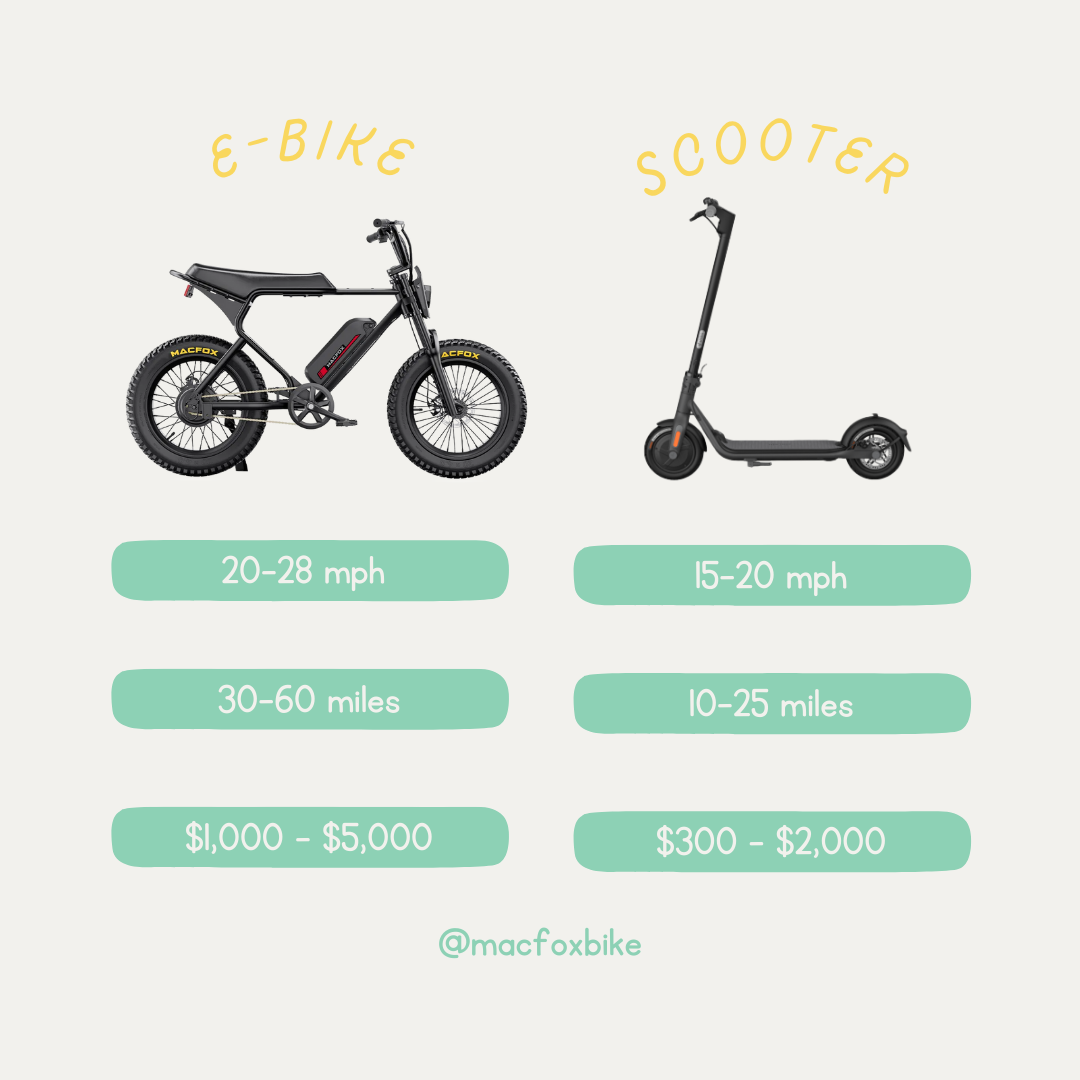
First things first: how far is your daily trek? This is the big one, folks. Answering this question will slash your options in half. If you’re looking at anything over, say, 10 miles round trip, you might start feeling the squeeze with an e-scooter. They’re great for zipping around town, hitting those last-mile coections, or shorter hops. But for longer hauls? An e-bike starts to look a lot more appealing. Think about it: you’ve got pedals. Even with the electric assist, you can put in a little effort, extend your range, and not worry about battery life draining faster than your patience on a Monday morning. For extended daily rides, e-bike range is generally superior.
Comfort is King (Especially on a Tuesday)

Source : biketoeverything.com
Let’s talk comfort. Because if your commute feels like a medieval torture device, you’re not going to stick with it. E-scooters are stand-up affairs. For 15 minutes? Fine. For 45 minutes with potholes? Your feet will be screaming. Your back will ache. Your sense of humor? Gone. E-bikes, on the other hand, offer a seat. A real, sit-down-and-relax-while-you-cruise kind of seat. This makes a HUGE difference on longer rides. Plus, e-bikes often have better suspension and bigger wheels, meaning they can handle bumps and uneven terrain with a lot more grace. Nobody wants a jarring ride to start their day. Seriously, consider the seated comfort of an e-bike.
Handling the Rough Stuff: Pavement vs. The World
What kind of roads are you dealing with? Smooth, pristine city streets? Or are you navigating cracked sidewalks, gravel paths, or the occasional off-road shortcut (we won’t tell)? E-scooters, with their small wheels, can get tossed around pretty easily by obstacles. A rogue pebble can feel like a boulder. An e-bike, especially one with larger tires, offers more stability and a smoother ride over varied surfaces. This translates to better control and a much less nerve-wracking experience when your route isn’t perfectly paved. Think stability, think confidence. For true all-weather, all-terrain commuting, e-bike stability wins.
Safety First, Always
Look, neither is a tank. But let’s be real. An e-bike generally puts you in a more stable, visible position. You’re sitting higher, you’re bigger, and you often have more robust braking systems. You’re more akin to a traditional cyclist, which means other vehicles are somewhat more accustomed to seeing you. E-scooters, especially the smaller ones, can feel a bit precarious. You’re lower to the ground, closer to road debris, and sometimes zip around in a way that can surprise drivers. Plus, many e-scooters lack basic safety features like turn signals. For your peace of mind and overall safety, road presence and inherent stability matter. E-bikes generally have a significant edge here.

Source : isinwheel.com
Portability: The Scooter’s Ace Up Its Sleeve
Okay, where the e-scooter absolutely crushes it? Portability. Many e-scooters fold up into a compact package. You can carry them onto the train, stash them under your desk, or tuck them away in a small apartment. This is huge if your commute involves multiple modes of transport or if storage space is tight. An e-bike, even a folding one, is still a bicycle. It’s bulkier, heavier, and just generally less convenient to carry around. If your primary need is a ‘last mile’ solution that you can easily transport, the scooter portability is unmatched.
Cost Breakdown: Upfront vs. Long Haul
Let’s talk money. E-scooters often have a lower upfront cost. You can grab a decent one for a few hundred bucks. E-bikes? They tend to start higher, often upwards of a grand, and can go much, much higher. BUT. Consider the long term. E-bikes are generally built to last longer and be more durable. They’re more akin to a traditional bicycle in terms of maintenance, and parts are usually more readily available. While e-scooters might seem cheaper initially, their smaller components and often less robust construction can lead to higher repair costs down the line. So, what’s the best value? It depends on your priorities, but don’t dismiss the long-term investment of an e-bike.
Speed: Who’s Quicker?
This is where things get interesting. Both can be quick. E-scooters, because they’re often simpler and lighter, can feel incredibly zippy in city traffic, weaving through congestion. E-bikes, especially with pedal assist, can achieve and maintain higher speeds, especially on open stretches. Legally, both are usually capped around 20 mph for Class 2 e-bikes or similar scooter classifications, but the feeling of speed and how you maintain it differs. An e-bike might get you there faster if your route is longer or has hills you can power up. An e-scooter might be quicker for short bursts in dense urban environments. It’s a nuanced win, really.
Source : promechbc.com
E-Bike vs. E-Scooter: The Gut Check
So, what’s the verdict? It’s not a one-size-fits-all answer, but here’s the reality check:
- You NEED an E-Scooter if: Your commute is short (think under 5 miles one way), you need extreme portability (carrying it upstairs, on transit), storage is severely limited, or your budget is super tight upfront. They’re fantastic for that final leg of your journey or quick errands. Think of them as super-powered skateboards with handlebars.
- You NEED an E-Bike if: Your commute is longer (over 5-10 miles), you value comfort for extended periods, you encounter varied terrain, safety and stability are top priorities, or you want a more substantial, long-term vehicle. They offer a more traditional cycling experience, just with a helpful boost. This is your daily commute workhorse.
Ultimately, the best electric vehicle for commuting depends on your specific needs. Don’t just buy the trendiest thing; buy the thing that will actually make your commute better. Trust me, your future self will thank you. You can learn more about choosing between them for longer commutes over at Viribus Bikes.
Frequently Asked Questions
-
Is it better to just get a scooter instead of an ebike?
Honestly, it really depends on your commute! If you’ve got short trips, need to carry it around a lot, or have a super tight budget, a scooter is a great call. They’re nimble and easy to stash. But if your ride is longer, bumpy, or you just want more comfort and stability, an e-bike is probably the better choice for daily use.
-
What kind of bike is best for daily commute?
For a daily commute, an electric bike usually takes the crown, especially if you’re going more than a few miles. They offer comfort with a seat, better stability, and can handle various weather and road conditions more reliably than a scooter. Plus, the longer range and pedal assist mean you’re less likely to run out of juice halfway there. It’s a more substantial, all-around commuter.
-
Are e-scooters good for commuting?
Yeah, e-scooters are definitely good for commuting, but with caveats! They absolutely shine for shorter distances, ‘last mile’ solutions (like getting from the train station to your office), or quick errands. They’re super portable and easy to store. However, for longer, rougher, or more frequent commutes, their lack of comfort, smaller wheels, and potentially shorter range can become drawbacks compared to an e-bike.
-
Can an e-scooter replace a car for commuting?
For some, absolutely! If your commute is under 5 miles, you live in a city with good infrastructure, and you don’t need to carry much, a high-quality e-scooter can totally replace a car. It’s cheaper to buy and run. But if you need to haul groceries, travel more than 10-15 miles round trip daily, or face challenging weather consistently, a car or an e-bike might still be more practical.
-
Which electric vehicle is fastest for commuting?
It’s a close race and depends on the specific models and your route! Both e-bikes and e-scooters are often legally limited to around 20 mph. However, e-bikes, especially those with good pedal assist, can often maintain higher speeds over longer distances or uphill climbs due to their gearing and rider input. E-scooters can feel quicker in stop-and-go city traffic due to their instant torque. For pure maximum speed capability over varied terrain, an e-bike often has the edge.