The Evolution of Hormone-Free Fertility Tracking: From Basal Body Temp Charts to Smart Rings
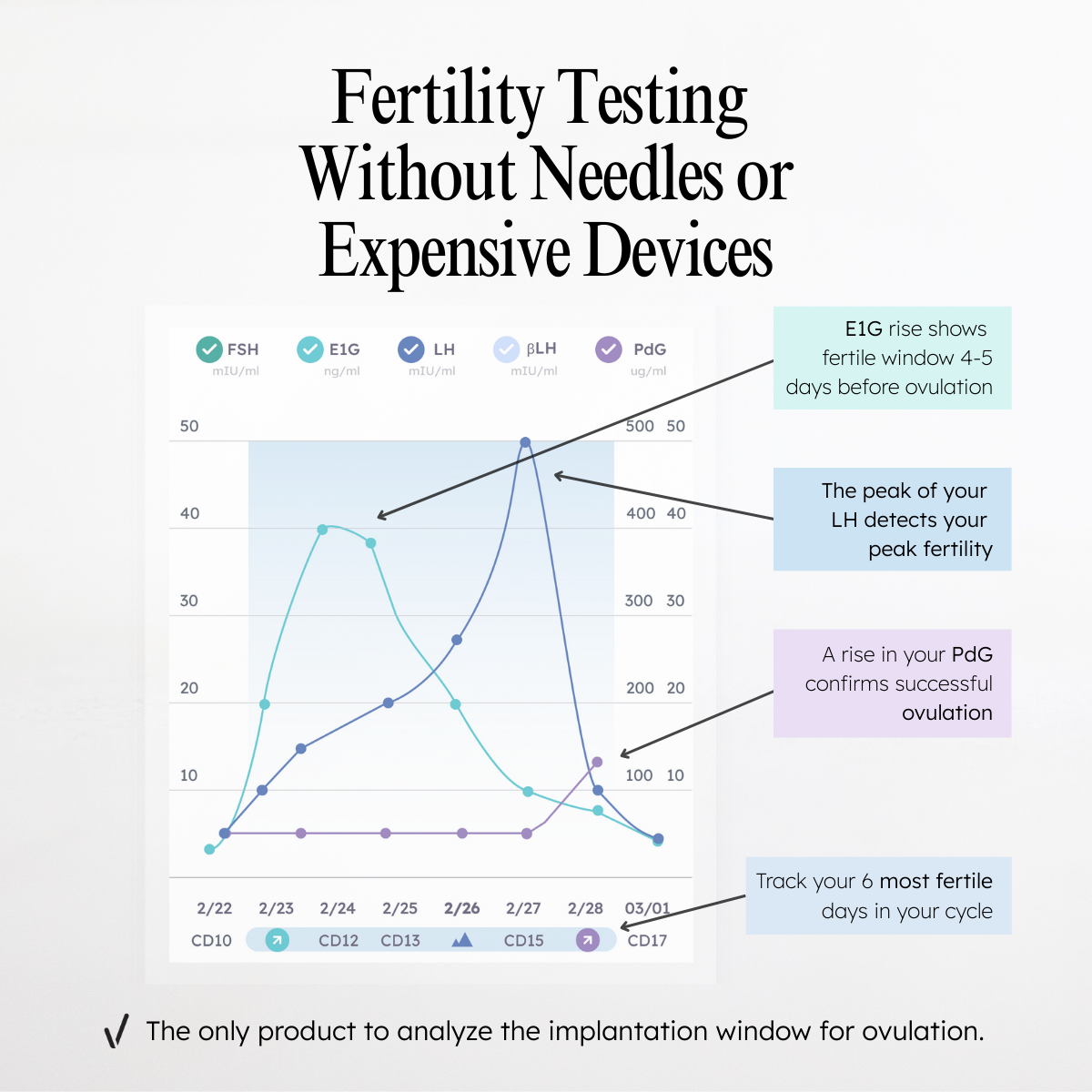
Remember the days of endless paper charts and guessing games? Yeah, me neither. But for a long time, that was the reality for anyone trying to understand their cycle without diving headfirst into hormonal birth control. It was a whole thing. We’re talking about tracking your basal body temperature (BBT) with a thermometer that beeps at 5 AM, noting cervical mucus changes (gross, but effective), and basically becoming a human scientist of your own reproductive system. It wasn’t exactly fun, and honestly, it wasn’t always reliable.

Source : proovtest.com
But times have changed. Dramatically. We’ve gone from scribbling in a notebook to having sophisticated tech right on our fingers. This whole journey of hormone-free fertility tracking has been a wild ride, moving from basic observation to complex algorithms powered by data from devices we wear daily. It’s about more than just avoiding pregnancy now; it’s about real insights into your health, your cycles, and your body’s unique rhythm. It’s genuinely exciting stuff, and it’s about time we talked about how we got here.
The Dawn of DIY Tracking: BBT and the Calendar Method
Let’s rewind the tape a bit. Before the fancy apps and sleek wearables, there was the calendar method. You’d track your periods, estimate ovulation based on averages (which, let’s be honest, is like predicting the weather in unpredictable climates), and hope for the best. Not exactly a high-tech solution, right? Then came basal body temperature tracking. You’d wake up, stick a thermometer under your tongue (or wherever you preferred), and record the reading. A slight jump in temperature signals that ovulation has likely occurred. It’s a solid indicator, but it’s retrospective – you only know ovulation happened after it happened. Think of it like trying to figure out when a train arrived by looking at the smoke coming from the station after it’s already gone. Plus, you had to be super consistent. No sleeping in, no late nights, no random fevers. It was a commitment, for sure.

Source : oova.life
Cervical mucus tracking was another big one. Changes in texture and consistency offer clues about your fertile window. When it gets stretchy and clear, like egg whites, that’s your prime time. Sounds… clinical. It takes practice, a keen eye, and a willingness to get personal. Very personal. These methods, while foundational, required a significant amount of user effort and interpretation. They laid the groundwork, though. They proved that understanding your cycle without hormones was possible, even if it was a bit of a hassle. It showed there was a demand for non-hormonal options and that people were willing to put in the work.
The App Revolution: Digitizing Fertility
Then, boom! The smartphone era hit, and suddenly, everything changed. Apps started popping up, promising to make tracking easier. You could input your BBT, period dates, and other symptoms, and the app would do the calculations. This was a huge leap. Suddenly, you didn’t need a separate thermometer and a giant spreadsheet. Your phone became your fertility command center. These apps helped users visualize their cycles, identify patterns, and get more consistent data. It was definitely an improvement. No more lost paper charts!
Some of these apps started incorporating more advanced algorithms, looking beyond just simple temperature shifts. They began factoring in cycle length variability and other personal data points. But many still relied heavily on user input, meaning if you forgot to log your temperature or your data was inconsistent, the app’s predictions were shaky. It was better, sure, but still not foolproof. It was like having a calculator that sometimes forgets to add the numbers you type in. We were getting closer to something truly useful, but the dependency on perfect user input was a major bottleneck.
The Rise of Wearables: Continuous Data, Smarter Insights

Source : forbes.com
Okay, now we’re talking. The real game-changer? Wearable technology. Forget manual logging. Devices like smart rings and advanced fitness trackers started measuring BBT continuously overnight. This is huge. Instead of one data point a day, you’re getting a constant stream of information. These wearables are designed to be worn every night, collecting temperature data automatically. This dramatically improves accuracy because it removes the user error element we talked about. No more forgetting to take your temperature at precisely the same time every single morning. The device does it for you, discreetly and consistently.
This continuous data collection allows for more sophisticated algorithms to identify ovulation patterns and fertile windows with greater precision. Think of it as going from a blurry photograph to a high-definition video feed of your cycle. Companies like Natural Cycles, which has been a pioneer in this space, have used this kind of data to develop FDA-approved algorithms for both contraception and conception. Their approach uses temperature data to pinpoint ovulation and identify fertile days. It’s a testament to how far we’ve come, moving from basic observation to data-driven insights. You can actually read more about natural cycles and hormone-free birth control over on Forbes. It’s impressive stuff.
Beyond Temperature: Advanced Metrics and AI
But it doesn’t stop at just temperature. The latest generation of fertility trackers is incorporating even more data points. Heart rate variability (HRV), resting heart rate, sleep patterns, even movement – these all provide clues about your body’s physiological state and stress levels, which can impact your cycle. AI is starting to play a bigger role, analyzing these complex datasets to offer more personalized predictions and insights. It’s like having a personal reproductive health analyst working 24/7.
Take for example, a systematic review that explored iovative approaches using wearable tech for fertility tracking. Researchers are digging into how these devices can provide more comprehensive insights beyond just predicting the fertile window. They’re looking at everything from identifying potential issues earlier to understanding the nuances of cycle irregularities. This isn’t just about tracking ovulation anymore; it’s about a deeper understanding of reproductive health. The potential for early detection of hormonal imbalances or other issues is massive. It’s moving into preventative health, which is incredibly powerful.

Source : bbnaturalhealth.com
What’s Next? The Future of Hormone-Free Tracking
So, what’s on the horizon? We’re likely to see even more integration with other health data. Imagine your fertility tracker syncing seamlessly with your doctor’s records (with your permission, of course). Or perhaps devices that can detect subtle hormonal shifts through sweat or other biomarkers. The goal is to provide a truly holistic view of your reproductive health, all without a single hormone pill or injection. It’s about putting more information and control directly into your hands, empowering you to make informed decisions about your body.
We’re also seeing a push towards more user-friendly interfaces and even more personalized feedback. AI will undoubtedly continue to refine predictive accuracy, making these tools even more reliable for both contraception and conception. The focus will remain on providing accurate, hormone-free options that fit into our busy lives. It’s about making reproductive health accessible, understandable, and controllable for everyone. The advancements are rapid, and it’s exciting to think about where this technology will take us in the next five to ten years. This is a journey that continues to unfold.
FAQs About Hormone-Free Fertility Tracking
Is hormone-free tracking as effective as hormonal birth control?
For contraception, it depends on the method and consistency. Apps like Natural Cycles, when used correctly, can be highly effective, comparable to some hormonal methods. However, it requires diligence. You absolutely have to follow the instructions to the letter. It’s not a ‘set it and forget it’ option like a hormonal IUD. The effectiveness is measured by something called the Perfect Use effectiveness, which is very high, but the ‘Typical Use’ effectiveness is lower because it relies on user adherence. So, yes, it can be, but you have to be all in.
Can I still track my cycle if I have irregular periods?
Tracking your cycle, even with irregular periods, is still incredibly valuable! While it might be harder to predict ovulation precisely using basic calendar methods, technologies that incorporate BBT, cervical mucus, and other physiological data can still offer insights. You’ll likely learn more about your body’s unique patterns, even if they aren’t textbook regular. The key is consistent data logging. Even irregular cycles have patterns, and technology is getting better at spotting them. Think of it as detective work for your own body; the clues might be a bit scattered, but they’re still there.

Source : shop.miracare.com
What are the main benefits of hormone-free tracking?
The biggest win? No hormonal side effects. Think ditching mood swings, weight fluctuations, or decreased libido that can come with hormonal birth control. You get a clearer picture of your health overall, as tracking can reveal patterns related to stress, illness, or other underlying issues. Plus, it’s empowering! You’re actively engaged in understanding your body, not just passively taking a pill. It’s about control and knowledge, with fewer unwanted physical consequences. It’s a more natural way to approach your reproductive health.
Do I need a special device to start hormone-free tracking?
Not necessarily to start, but it definitely helps. You can begin with a good old-fashioned basal body thermometer and a notebook or a free app to log your data. That’s the foundational step. However, for more accurate and convenient tracking, especially if you want to use it for contraception, investing in a dedicated fertility tracking wearable like a smart ring or a specialized thermometer that syncs with an app is highly recommended. These devices automate data collection and often use more sophisticated algorithms, making the process much smoother and more reliable.
How does AI improve hormone-free fertility tracking?
AI is the secret sauce that makes modern hormone-free tracking so powerful. It can analyze vast amounts of data – temperature, heart rate, sleep, cycle history – far better than a human ever could. AI algorithms learn your unique patterns, identify subtle shifts that might indicate ovulation or other cycle changes, and provide more precise predictions. It’s about moving beyond simple calculations to complex pattern recognition. This leads to higher accuracy for predicting your fertile window and understanding your cycle’s nuances. Plus, AI can adapt as your cycle changes over time, offering continuously personalized insights.
Frequently Asked Questions
-
Is hormone-free tracking as effective as hormonal birth control?
For contraception, it depends on the method and consistency. Apps like Natural Cycles, when used correctly, can be highly effective, comparable to some hormonal methods. However, it requires diligence. You absolutely have to follow the instructions to the letter. It’s not a ‘set it and forget it’ option like a hormonal IUD. The effectiveness is measured by something called the Perfect Use effectiveness, which is very high, but the ‘Typical Use’ effectiveness is lower because it relies on user adherence. So, yes, it can be, but you have to be all in.
-
Can I still track my cycle if I have irregular periods?
Tracking your cycle, even with irregular periods, is still incredibly valuable! While it might be harder to predict ovulation using basic calendar methods, technologies that incorporate BBT, cervical mucus, and other physiological data can still offer insights. You’ll likely learn more about your body’s unique patterns, even if they aren’t textbook regular. The key is consistent data logging. Even irregular cycles have patterns, and technology is getting better at spotting them. Think of it as detective work for your own body; the clues might be a bit scattered, but they’re still there.
-
What are the main benefits of hormone-free tracking?
The biggest win? No hormonal side effects. Think ditching mood swings, weight fluctuations, or decreased libido that can come with hormonal birth control. You get a clearer picture of your health overall, as tracking can reveal patterns related to stress, illness, or other underlying issues. Plus, it’s empowering! You’re actively engaged in understanding your body, not just passively taking a pill. It’s about control and knowledge, with fewer unwanted physical consequences. It’s a more natural way to approach your reproductive health.
-
Do I need a special device to start hormone-free tracking?
Not necessarily to start, but it definitely helps. You can begin with a good old-fashioned basal body thermometer and a notebook or a free app to log your data. That’s the foundational step. However, for more accurate and convenient tracking, especially if you want to use it for contraception, investing in a dedicated fertility tracking wearable like a smart ring or a specialized thermometer that syncs with an app is highly recommended. These devices automate data collection and often use more sophisticated algorithms, making the process much smoother and more reliable.
-
How does AI improve hormone-free fertility tracking?
AI is the secret sauce that makes modern hormone-free tracking so powerful. It can analyze vast amounts of data – temperature, heart rate, sleep, cycle history – far better than a human ever could. AI algorithms learn your unique patterns, identify subtle shifts that might indicate ovulation or other cycle changes, and provide more precise predictions. It’s about moving beyond simple calculations to complex pattern recognition. This leads to higher accuracy for predicting your fertile window and understanding your cycle’s nuances. Plus, AI can adapt as your cycle changes over time, offering continuously personalized insights.