Ditch the Landfill Mindset: Your Guide to Circular Economy Certifications
So, you’re thinking about diving into the circular economy, huh? Good move. It’s not just some eco-hippie trend; it’s the future of business, plain and simple. Companies are finally waking up and realizing that trashing stuff isn’t a sustainable business model. They need people who get how to keep materials in play, reduce waste, and make some serious cash doing it. But where do you even start? You can’t just say you’re ‘circular’ and expect a job. You need proof. That’s where online certifications come in. They’re your ticket to showing employers you’re not just blowing smoke.
Source : circulareconomyalliance.com
Why Bother With a Circular Economy Certification?
Look, the world is drowning in its own garbage. Linear models – take, make, dispose – they’re toast. The circular economy flips that script. It’s all about designing out waste, keeping products and materials in use, and regenerating natural systems. Think repairing, reusing, remanufacturing. Big companies are pouring money into this stuff. Why? Because regulations are getting tighter, customers are demanding it, and frankly, it’s just smarter business. Having a certification in this space isn’t just a nice-to-have; it’s becoming a must-have. It tells potential employers you’ve got the specific knowledge they desperately need right now.
Forget wading through endless articles. You need tangible skills and a credential to back them up. A good certification proves you understand the core principles, can identify opportunities, and maybe even implement them. It’s a direct signal to recruiters and hiring managers that you’ve invested time and effort into understanding this critical shift.
The Top Tier Online Courses You Need to Check Out
Alright, let’s get down to brass tacks. You want the good stuff, the courses that actually mean something. There are a few heavy hitters out there that will make your resume pop. We’re talking about programs designed by folks who live and breathe this stuff.
Source : professionalprograms.mit.edu
MIT Professional Education: Circular Economy Online Program
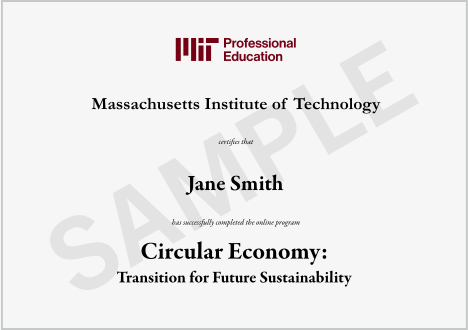
You can’t talk about iovation without mentioning MIT, right? Their online program is legit. It dives deep into how to actually enact an ethical economic model. This isn’t just theory; it’s about practical application. They cover designing for durability, new business models, and how to measure success. You’ll learn from professors like John E. Fernández and Olivier de Weck – guys who actually know their stuff. Plus, you get a certificate that carries serious weight. If you’re serious about making a real impact and getting a high-level understanding, this is a top contender.
This course is designed for anyone looking to understand the ‘why’ and ‘how’ of circularity, from business leaders to engineers. It breaks down complex ideas into actionable steps. You’ll walk away with a solid grasp of sustainable present and future economic models. It really helps you understand the nuances of a sustainable future.
Check out their detailed program info here: MIT Circular Economy Program. Seriously, if you want a foundational understanding backed by a top institution, this is it. It’s a game-changer for your career trajectory in the green economy.
Circular Economy Alliance (CEA) Certifications
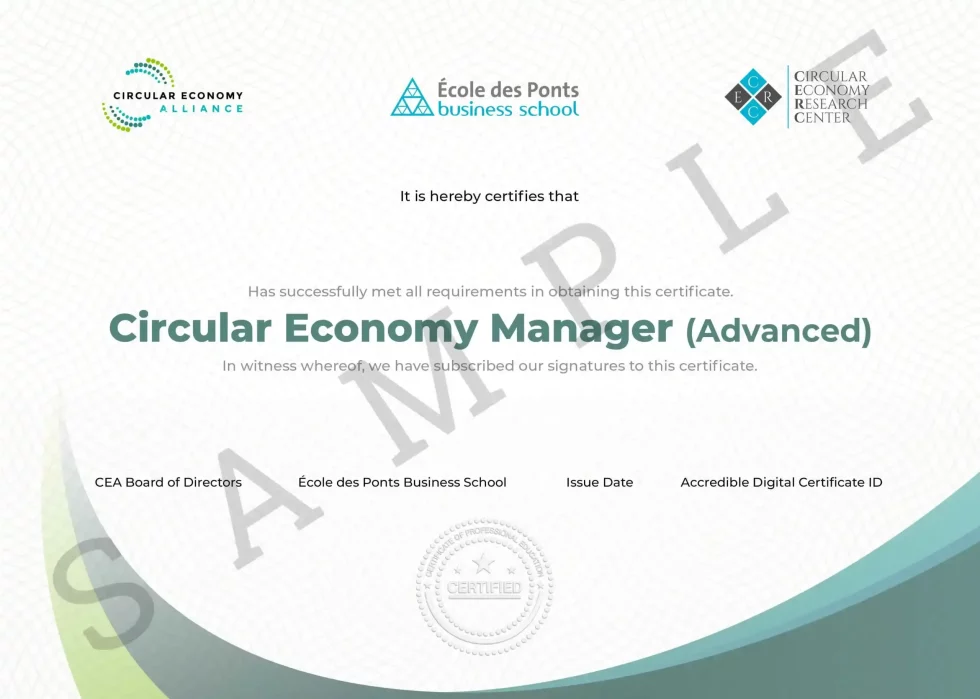
The CEA is another big player. They offer a range of certifications, and their Circular Economy Specialist designation is pretty impressive. It even snagged some Gold and Silver awards from Brandon Hall Group. That’s not chump change. They focus on practical skills and understanding the nitty-gritty of implementing circular strategies. It’s more hands-on, geared towards people who want to be in the trenches making it happen.
Their courses cover everything from basic definitions to advanced implementation strategies. You’ll learn how to apply circular principles within your own organization. They emphasize a community aspect too, so you’re not just learning in a vacuum. This is about building a network of circular economy professionals. Plus, their certification process is pretty straightforward, making it accessible.
You can explore their offerings here: CEA Circular Economy Courses. If you’re looking for a community and a certification recognized for its quality, the CEA is a solid choice.
Source : circulareconomycourse.com
Ellen MacArthur Foundation Learning Resources
You can’t talk about the circular economy without mentioning the Ellen MacArthur Foundation. They are, basically, the godparents of this movement. While they offer a lot of free resources and introductory materials, they also partner on more in-depth courses. Think MOOCs (Massive Open Online Courses) and specialized programs. These are often accessible and great for getting a broad overview or diving into specific sectors like fashion, food, or plastics. They’re fantastic for building a foundational understanding and staying current with the latest thinking.
Their approach is systemic. They don’t just focus on one product or material; they look at the whole picture. This is crucial for understanding how to redesign entire systems. Their materials are often developed with leading universities, so you know the content is top-notch. It’s a great way to get your foot in the door.
Dive into their educational resources here: Ellen MacArthur Foundation Learning. They are the go-to source for understanding the philosophy and scope of the circular economy. Absolutely essential for anyone serious about this field.
Other Notable Programs to Consider
Beyond those big three, there are other options. Coursera and edX host numerous courses from various universities on topics like sustainable business, waste management, and circular design. While they might not be exclusively ‘circular economy’ focused, the skills are highly transferable. Look for courses in sustainable materials management or packaging design for circularity. These can be great supplements or starting points, especially if you’re on a tighter budget.
Some programs focus on specific industries. For example, if you’re in fashion, look for courses on circular textiles. If you’re in construction, search for programs on sustainable building materials and waste reduction in that sector. The key is to find programs that align with your existing experience and career goals. Tailoring your learning shows a strategic approach.
What Skills Will These Certifications Actually Teach You?
Source : credly.com

Okay, so you get the certificate. What can you do with it? A good certification will equip you with a solid understanding of circular economy principles. This means knowing the difference between linear and circular models, understanding product life cycles, and grasping concepts like ‘design for disassembly’ and ‘industrial symbiosis’.
You’ll likely learn about new business models that support circularity – think product-as-a-service, leasing, or take-back schemes. It’s about shifting from selling units to selling outcomes or access. This requires a whole new way of thinking about value creation and customer relationships.
Expect to learn about sustainable material sourcing and management. How do you find recycled or renewable materials? How do you track them? How do you ensure they retain their value? These are practical questions companies are grappling with daily. Plus, you’ll get a handle on policy and regulations that are driving the circular transition. Knowing the legal landscape is crucial for implementation.
And don’t forget the data side of things. Measuring impact, tracking resource flows, and using data to identify improvement opportunities are key skills. A circular economy professional needs to be analytical and results-oriented. It’s not just about being green; it’s about being efficient and profitable.
How to Choose the Right Certification for YOU
Picking the right course feels like a big decision, I get it. Don’t just grab the first one you see. Think about your goals. Are you trying to pivot your career entirely? Or are you looking to add a specialized skill to your current role? Your answers here will guide you.
Consider the course content. Does it cover the specific aspects of the circular economy that interest you most? If you’re passionate about design, look for a program heavy on circular design principles. If business strategy is your jam, find one that focuses on new business models and implementation. Read the syllabus! It’s your roadmap. Make sure it aligns with your career aspirations.
Look at the institution or organization offering the certification. Is it reputable? Does it have industry recognition? MIT and the Ellen MacArthur Foundation carry a lot of weight. CEA’s awards suggest they’re also a strong contender. Check reviews, talk to people who have taken the course if possible. You want a credential that employers will respect. This isn’t the time to go with an unknown entity; stick with the proven players.
Source : circulareconomyalliance.com
Finally, consider the time commitment and cost. Some programs are intensive, while others are more flexible. Factor in tuition fees, potential material costs, and the time you’ll need to dedicate to studying. Balance the investment against the potential return – a better job, a higher salary, or the ability to make a meaningful impact.
The Future is Circular, Get Certified
The shift towards a circular economy isn’t a fad; it’s a fundamental economic transformation. Businesses that don’t adapt will be left behind. Companies are actively seeking talent with the skills to navigate this transition. Online certifications are your most direct path to acquiring those skills and demonstrating your commitment.
Investing in a reputable circular economy certification is an investment in your future. It positions you as a forward-thinking professional ready to tackle the challenges and seize the opportunities of a more sustainable world. So, stop dithering. Pick a program, dive in, and get that certification. Your future self, and the planet, will thank you. It’s time to be part of the solution.
Frequently Asked Questions
-
What exactly is a circular economy?
Think of it as the opposite of ‘take-make-dispose.’ A circular economy is all about keeping resources in use for as long as possible, extracting maximum value, and then recovering and regenerating products and materials at the end of their service life. It’s about designing out waste and pollution, keeping products and materials in use, and regenerating natural systems. It’s a smarter, more sustainable way to do business.
-
Why do I need a certification for circular economy jobs?
Honestly? Because ‘circular economy’ is becoming a huge buzzword, and companies want proof you know what you’re talking about. A good certification shows you’ve got the foundational knowledge and specialized skills they’re looking for. It makes your resume stand out in a pile of applicants and tells employers you’re serious about this field, not just jumping on a trend. It’s your credential in the green job market.
-
Are online certifications respected by employers in the circular economy field?
Absolutely, especially if they’re from reputable sources. Programs from institutions like MIT or organizations like the Ellen MacArthur Foundation carry a lot of weight. Employers recognize that these certifications represent dedicated learning and a serious understanding of circular principles. They signal that you’ve invested in acquiring specific, in-demand skills, which is exactly what they need.
-
What kind of jobs can I get with a circular economy certification?
Loads! Think sustainability manager, circular economy consultant, supply chain specialist focused on reverse logistics, product lifecycle manager, or even roles in sustainable design and iovation. Many companies, from startups to giants like Patagonia or Unilever, are creating new roles specifically focused on circularity. Your certification opens doors to these exciting opportunities.
-
How much do these circular economy courses typically cost?
The cost can vary wildly. You’ve got free resources from places like the Ellen MacArthur Foundation (great for getting started!) all the way up to several thousand dollars for intensive programs from top universities like MIT. You need to weigh the cost versus the value – consider the program’s depth, the institution’s reputation, and the potential career benefits. There are options for nearly every budget if you look carefully.