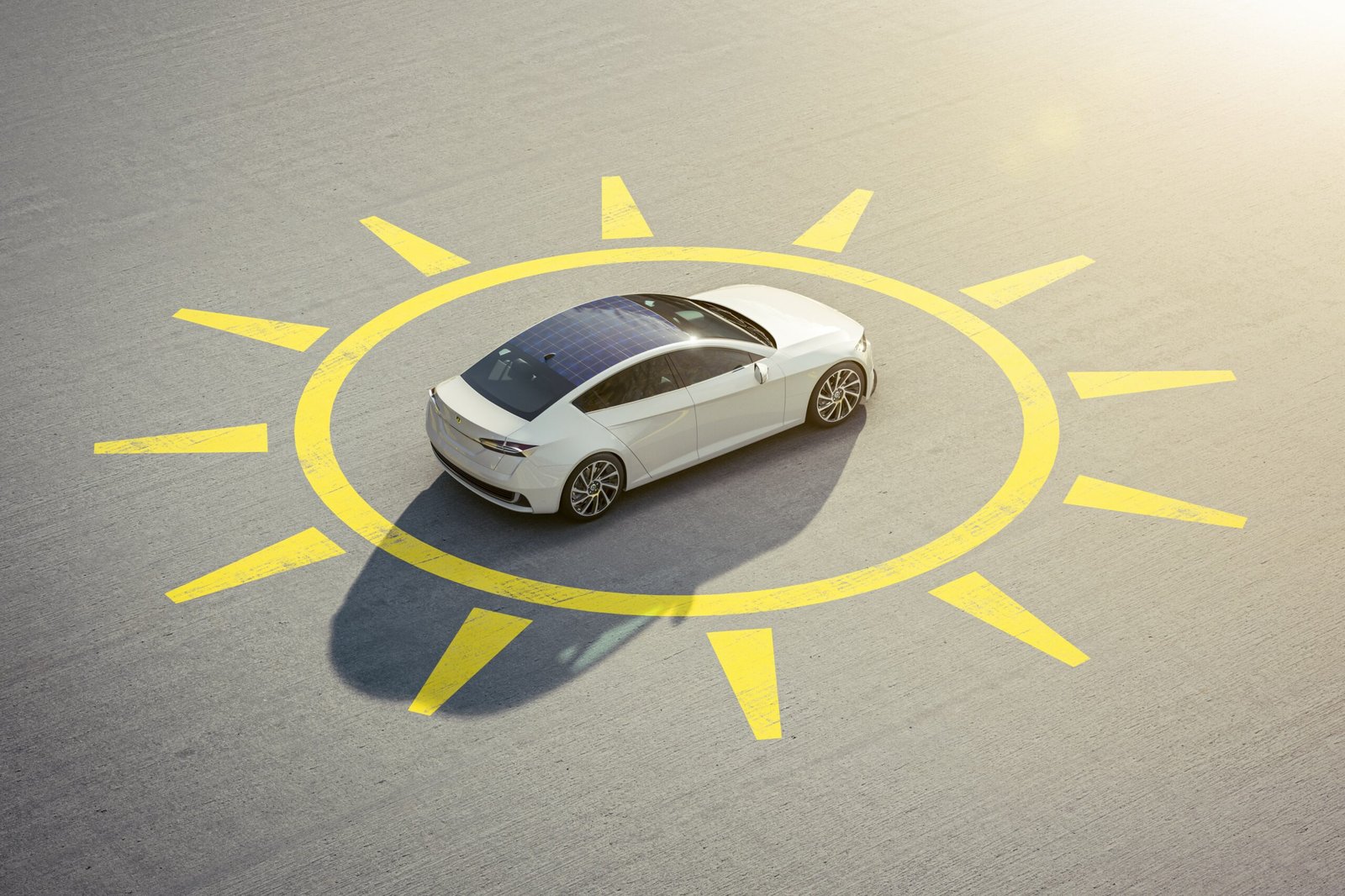
Solar-Powered Cars: Gimmick or Future Reality? Let’s Find Out.
Okay, let’s cut to the chase. Solar-powered cars. Sounds like something out of a sci-fi movie, right? Flying cars, robot butlers, and vehicles that run purely on sunshine. The dream is alluring: zero emissions, virtually free fuel, and the sweet satisfaction of driving something truly green. But is it actually going to happen? Or is it just another hyped-up concept that’ll fade away like a bad fad?
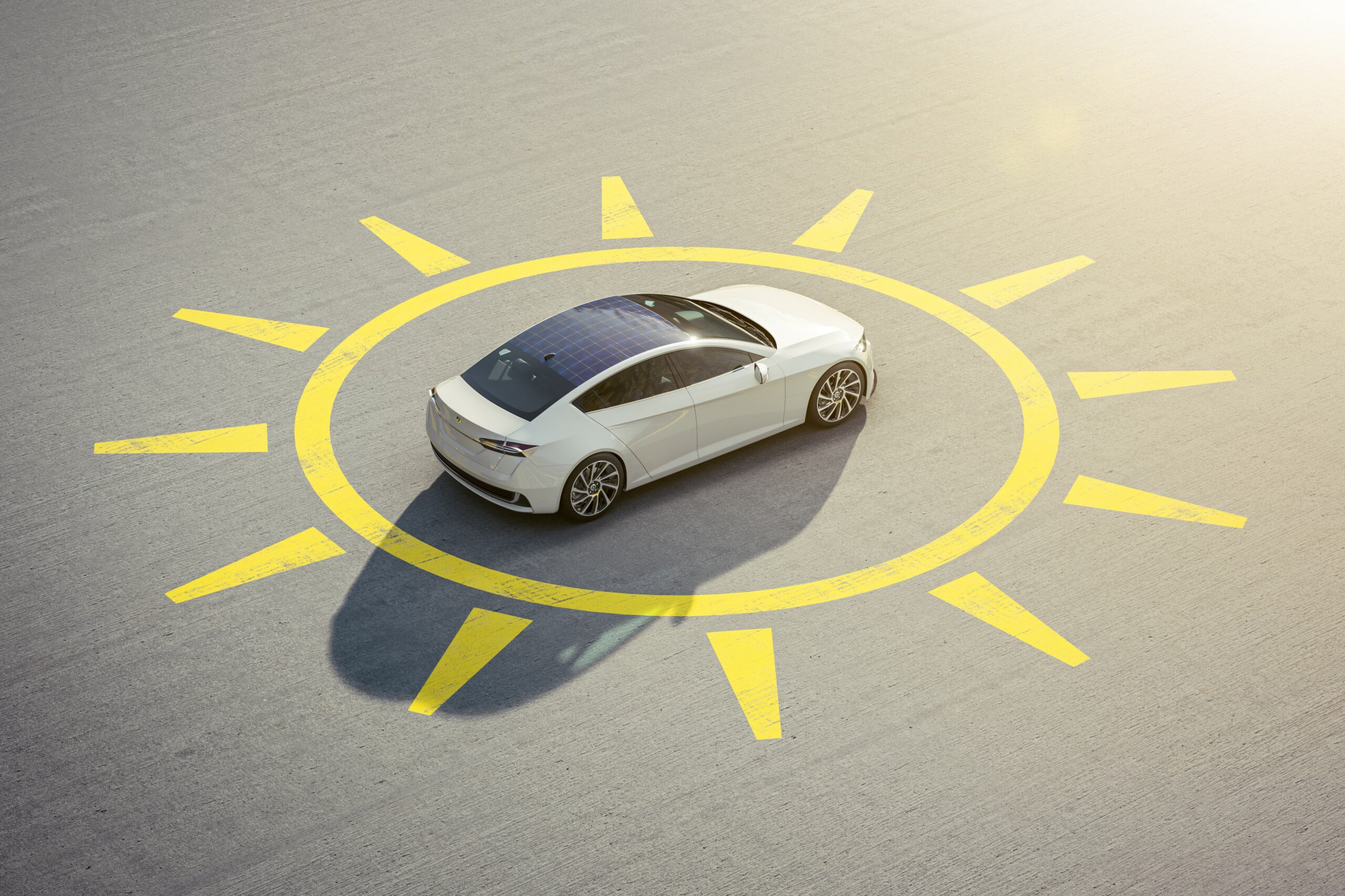
Source : autovista24.autovistagroup.com
We’ve all seen the sleek prototypes, the ambitious startups promising the moon. They talk about cars covered in advanced solar cells, adding miles to your range with every hour the sun shines. Sounds fantastic. But when you dig a little deeper, the reality starts to feel… well, less suy.
The Basic Problem: Not Enough Sun, Too Much Car
Here’s the brutal truth: a car is a big, heavy thing. It needs a ton of energy just to get moving, especially at highway speeds. Think about the energy it takes to push that metal box through the air, overcome friction, and get you from A to B. Now think about how much energy a typical solar panel can generate.
Even the most cutting-edge solar panels you can slap onto a car’s surface – and trust me, they have to be curved and integrated, not just flat sheets – just don’t produce that much juice. We’re talking maybe a few extra miles of range per day under ideal, non-cloudy conditions. Compare that to the hundreds of miles most people expect from a car. It’s a drop in the bucket. A tiny, insignificant drop.
This is the core issue that makes many solar car concepts seem more like science fiction than feasible reality. The energy density of sunlight, especially when spread over the limited surface area of a vehicle, simply can’t keep up with the energy demands of typical driving. It’s like trying to fill a swimming pool with a leaky eyedropper. You’re just not going to get there.
The Prototypes: Pretty, But Practical?
You’ve probably heard of companies like Aptera Motors. They’ve got these wild, three-wheeled designs that look like something from the future. And yes, they’ve integrated solar panels into their bodies. The idea is that while it’s parked, it’s passively charging. Cool concept.
Source : autos.yahoo.com

Then there’s Lightyear. They made a splash with their Lightyear 0, claiming it could add significant miles just from the sun. Another impressive-looking piece of tech. And Sono Motors with their Sion, which also featured solar panels. These aren’t just pipe dreams; real engineers are building these things.
But here’s the catch. These vehicles are often ultra-lightweight, super-aerodynamic, and designed for maximum efficiency. They’re not your average SUV or sedan. They often have limitations on speed, passenger capacity, or cargo space to make the solar aspect even remotely viable. You’re trading practicality for a few sun-powered miles. It’s a trade-off many consumers just aren’t willing to make. It’s like choosing a scooter over a pickup truck because it’s slightly more fuel-efficient.
The Numbers Don’t Lie: Energy Output vs. Energy Need
Let’s get real with some numbers. A typical modern electric car battery holds around 60 kWh. That’s a lot of energy. To get, say, 300 miles of range, you’re using about 0.2 kWh per mile (300 miles / 60 kWh = 5 miles/kWh, so 1/5 = 0.2 kWh/mile). That’s roughly 200 watt-hours per mile. A good solar panel on a car might generate, generously, around 200-300 watts per square meter under peak sunlight. A car’s roof surface area is maybe 4-5 square meters. So, best-case scenario, you’re looking at maybe 1-1.5 kilowatts of power generation while driving in direct sun.
If you drive for an hour at highway speeds (say, 60 mph), you’ve used about 12 kWh of energy (60 mph 0.2 kWh/mile). In that same hour, your solar panels generated maybe 1-1.5 kWh. That’s a 10% recharge, at best. Not exactly fueling your commute. This is why the idea often relies on the car being parked for extended periods to soak up sun. It’s not about supplementing your drive; it’s about trickle-charging when you’re not using it.
This disparity between energy needed and energy generated is the crux of the problem. You can’t ignore the physics. While solar technology itself is improving, the fundamental challenge of fitting enough power generation onto a mobile object that consumes vast amounts of energy remains a monumental hurdle. It’s not just about better panels; it’s about the sheer scale of energy required.
So, Are Solar Cars a Complete Gimmick?
Not entirely. It depends on how you define ‘solar-powered car’. If you’re picturing a car that runs solely on the sun, like a perpetual motion machine, then yeah, that’s pretty much a gimmick for mainstream use right now. The technology just isn’t there to make it practical for the average driver.
However, if you consider solar panels as a range extender or a way to reduce your reliance on the grid, then the concept has merit. Think of it as a bonus feature. That little bit of extra range you get while parked in the sun? It adds up. It can reduce your charging frequency or give you peace of mind if you’re ruing low. This is where the real value might lie.
This is the perspective explored in articles discussing solar-powered cars: gimmick or great idea?. It’s about managing expectations and understanding the limitations. The technology itself isn’t the gimmick; the over-promising of what it can do as a sole power source often is.
The Future: More Solar Integration, Less Pure Solar
What’s more likely is that we’ll see more solar integration in EVs, but not in the way most people imagine. Think about solar roofs that can power auxiliary systems – the air conditioning when parked, the infotainment system, even charge a small secondary battery for accessories. This reduces the load on the main battery, freeing it up for driving.
Companies are exploring this. Imagine parking your car on a hot summer day and coming back to a cabin that’s already cooled down, powered by the sun. Or being able to run your car’s ventilation system on suy days without draining your main battery. That’s a tangible benefit. It’s not about ditching the charger; it’s about making the EV experience even better.

Source : eepower.com
The reality of solar power on vehicles is nuanced. While a car ruing entirely on the sun is a distant dream, using solar panels to supplement power, reduce grid dependency, and enhance the functionality of electric vehicles is very much within reach. It’s about smart application, not magic.
What About Charging?
Let’s be clear: even with integrated solar panels, you’re still going to need to plug in your electric car. The sun just can’t provide enough energy to replace traditional charging for most drivers. The amount of energy you’d need to drive 50 miles is far more than even a large array of panels on a car could generate in a typical day.
Think about it this way: charging a typical EV battery fully might take anywhere from 4 to 12 hours at home, depending on your charger. That’s a lot of stationary time. During that time, solar panels can contribute. But even then, the contribution is often relatively small compared to the total energy needed to fill the battery. We’re talking maybe 5-10 miles of range added per day from solar, which is great, but it’s not going to charge your car overnight. You’re still tethered to the grid or a charging station for the bulk of your power.
So, while solar panels can help, they are a supplement, not a replacement. The dream of never plugging in your car again is, for now, just that – a dream. The reality of solar-powered cars involves understanding these energy limitations.
Who Benefits Most?
If solar panels are integrated into a car, who actually benefits the most? It’s likely people who live in suy climates and have predictable, shorter commutes. Someone who parks their car outside for 8+ hours a day in Arizona, for instance, will get far more benefit than someone in Seattle who drives 100 miles a day and parks in a garage.
It’s also beneficial for folks who want to reduce their carbon footprint as much as humanly possible and are willing to make compromises. If you’re okay with a smaller, lighter vehicle and primarily use it for short trips, then the added solar charging could be a significant plus. It aligns with a lifestyle focused on sustainability, where every little bit helps. Think of dedicated eco-enthusiasts.
Beyond that, the benefits are more psychological than practical for the average driver. The idea of generating your own clean energy is appealing, even if the actual energy contribution is minimal. It taps into a desire to be more self-sufficient and environmentally conscious.
The Verdict: A Future Add-On, Not a Standalone Solution
So, back to our big question: gimmick or future reality? My take? Solar-powered cars are not a gimmick, but they’re not the sole power source of the future either. They are a future add-on, a complementary technology that will make electric vehicles even better.
The prototypes pushing for pure solar power are admirable for their ambition, but they’re likely niche products. The real future lies in EVs that thoughtfully integrate solar panels to:
- Extend range slightly.
- Power auxiliary systems (like A/C when parked).
- Reduce overall energy consumption from the grid.

Source : youtube.com
It’s about adding a layer of efficiency and sustainability to an already green technology. Think of it as the cherry on top, not the whole sundae. The core of electric mobility will still rely on charging infrastructure. Solar is the garnish, the extra sparkle.
It’s a smart evolution. Instead of trying to reinvent the wheel (or the entire powertrain) with just solar, manufacturers are looking at how to enhance the existing EV platform. This makes more sense economically and technologically. It’s a pragmatic approach to making electric cars even more appealing and sustainable in the long run.
FAQs About Solar-Powered Cars
Can a car run entirely on solar power?
Right now, for practical, everyday driving, no car can run entirely on solar power. The surface area of a car is too small to generate enough energy from sunlight to meet the significant power demands of driving, especially at highway speeds. While some specialized, ultra-lightweight vehicles might achieve limited all-solar travel under very specific conditions, it’s not feasible for the average consumer.
How many miles can a solar car add per day?
This varies wildly, but typically, integrated solar panels on a car might add anywhere from 5 to 30 miles of range per day under ideal, suy conditions. This is assuming the car is parked and stationary for a significant portion of the day. During driving, the energy contribution is much lower. It’s a nice bonus, but not enough to replace regular charging.
Are solar-powered cars expensive?
Yes, vehicles with integrated solar panels tend to be more expensive than comparable non-solar EVs. The advanced solar cells, integration costs, and often specialized design contribute to a higher price tag. Companies like Lightyear and Aptera have historically targeted premium pricing, though some aim for more accessible models.
What are the main challenges for solar cars?
The biggest challenges are the limited surface area for solar collection and the high energy demands of a vehicle. Other issues include the efficiency of current solar technology, the weight and durability of panels on a car, weather dependency (clouds, rain, snow drastically reduce output), and the cost of integrating the technology. Plus, you’ve got the practicality trade-offs for aerodynamics and weight savings.
Will solar panels on cars become common?
It’s likely that solar panels will become a more common feature on EVs, but primarily as a supplementary power source. Instead of powering the whole car, they’ll likely be used to power auxiliary systems, provide a small range boost, or reduce the load on the main battery. Don’t expect every car to be fully solar-powered, but seeing solar roofs and panels as an option for enhanced efficiency and features is a realistic expectation.
Frequently Asked Questions
-
Can a car run entirely on solar power?
Right now, for practical, everyday driving, no car can run entirely on solar power. The surface area of a car is too small to generate enough energy from sunlight to meet the significant power demands of driving, especially at highway speeds. While some specialized, ultra-lightweight vehicles might achieve limited all-solar travel under very specific conditions, it’s not feasible for the average consumer.
-
How many miles can a solar car add per day?
This varies wildly, but typically, integrated solar panels on a car might add anywhere from 5 to 30 miles of range per day under ideal, suy conditions. This is assuming the car is parked and stationary for a significant portion of the day. During driving, the energy contribution is much lower. It’s a nice bonus, but not enough to replace regular charging.
-
Are solar-powered cars expensive?
Yes, vehicles with integrated solar panels tend to be more expensive than comparable non-solar EVs. The advanced solar cells, integration costs, and often specialized design contribute to a higher price tag. Companies like Lightyear and Aptera have historically targeted premium pricing, though some aim for more accessible models.
-
What are the main challenges for solar cars?
The biggest challenges are the limited surface area for solar collection and the high energy demands of a vehicle. Other issues include the efficiency of current solar technology, the weight and durability of panels on a car, weather dependency (clouds, rain, snow drastically reduce output), and the cost of integrating the technology. Plus, you’ve got the practicality trade-offs for aerodynamics and weight savings.
-
Will solar panels on cars become common?
It’s likely that solar panels will become a more common feature on EVs, but primarily as a supplementary power source. Instead of powering the whole car, they’ll likely be used to power auxiliary systems, provide a small range boost, or reduce the load on the main battery. Don’t expect every car to be fully solar-powered, but seeing solar roofs and panels as an option for enhanced efficiency and features is a realistic expectation.