
The Social Media Shake-Up: Why Tiny, Exclusive Clubs Are Wiing
Remember when Facebook was everything? Or how Instagram seemed like the only place to be? Yeah, those days feel like ancient history, don’t they? We’re living through a massive shift. People are ditching the giant, noisy public squares for something way more intimate. Think less Times Square, more hidden speakeasy. We’re talking about the rise of niche invite-only social platforms. It’s a real thing, and it’s changing the game.

Source : themekraft.com
Why the Big Escape?
Honestly, who can blame folks for wanting out? The big platforms are a mess. Endless scrolling through ads, curated perfection that makes you feel bad about your own life, and a constant battle for attention. It’s exhausting. Plus, your data? It’s like a free-for-all out there. People are tired of the noise. They crave coection, real coection, with folks who actually get them. It’s like wanting to talk about your obscure coin collection without a thousand randos chiming in about crypto scams.
This is where the niche communities step in. They’re like the cool kids’ table, but way more accessible if you know the right people or find the right group. These aren’t just random forums; they’re curated spaces. Think about it: a platform just for vintage synth collectors? Or one dedicated solely to vegan bakers in Brooklyn? It’s about shared passions, not just accumulating followers. This focus makes them incredibly sticky. People find their tribe, and they stick around.
Source : linkedin.com

The Allure of Exclusivity: Invite-Only Advantage
Now, let’s talk about that ‘invite-only’ part. It sounds snobby, right? Maybe a little. But it’s also smart. When you have to be invited, it means someone vouches for you. It cuts down on bots, trolls, and just general internet garbage. You’re more likely to encounter people who are genuinely interested in the community’s purpose. It’s like getting into a private club; there’s a certain cachet, sure, but it also guarantees a higher quality of interaction. This vetting process naturally builds trust and fosters deeper engagement.
Plus, exclusivity drives demand. Everyone wants what they can’t easily have. These platforms create a sense of belonging and status. Being part of an invite-only group feels special. It’s not about vanity metrics anymore; it’s about being in. This carefully controlled environment is a huge draw. It’s the digital equivalent of a secret handshake. This is why we’re seeing a significant shift to private communities.
Spotlight on Some Niche Players
Okay, so what does this actually look like? It’s not just one or two platforms. It’s a growing ecosystem. You’ve got your early movers and your fast followers. Think about platforms like Clubhouse (back when it was invite-only, anyway). It exploded because everyone wanted a piece of that audio-chat pie. Then there are apps like BeReal, which forces authenticity by making you post a photo at a random time each day. It’s niche in its own way – anti-curation. It’s all about real-time, unfiltered moments.
Source : linkedin.com

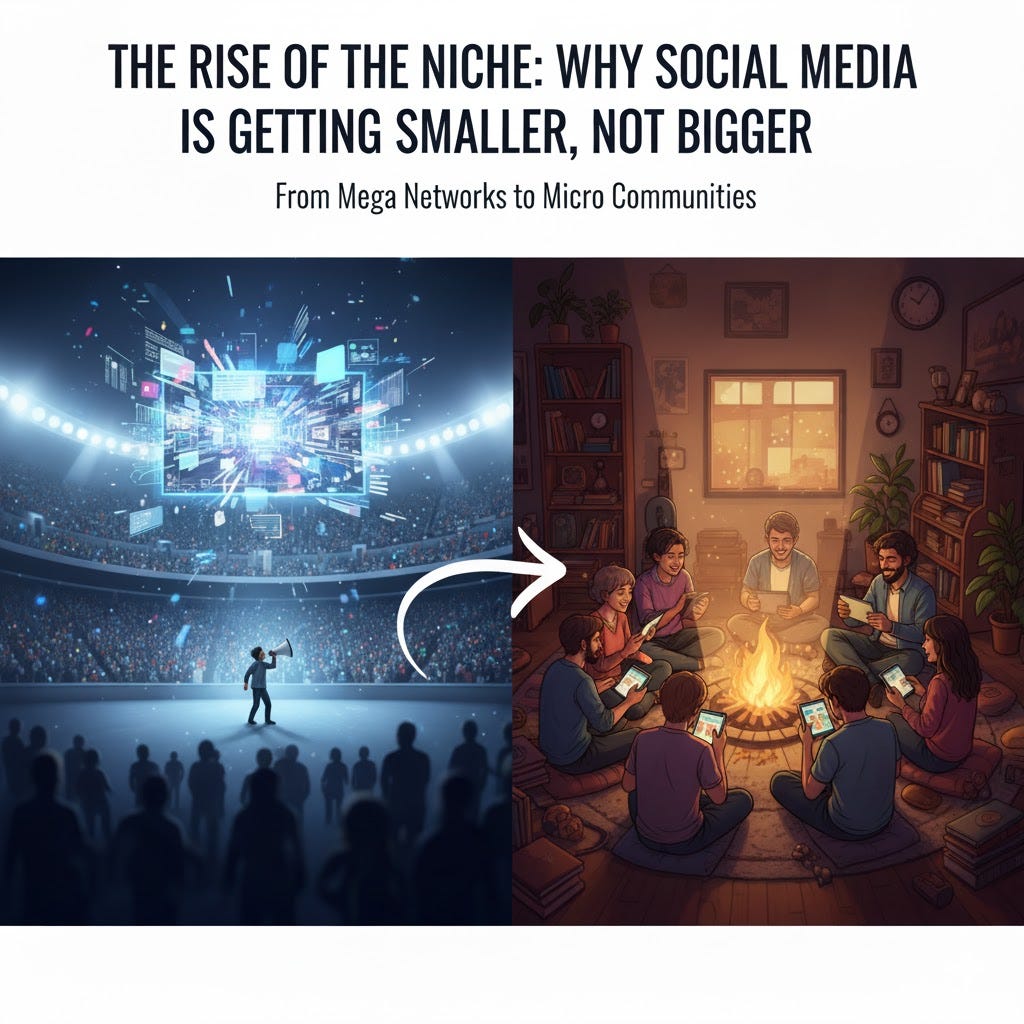
There’s also a rise in platforms catering to specific professional or hobbyist groups. Imagine a private network for indie game developers to share code and get feedback, or a platform exclusively for rare book collectors to discuss acquisitions. These aren’t trying to be the next Facebook. They’re content serving a very specific need. Marie Eis O’Coor talks about this trend, noting “Why Social Media is Getting Smaller, Not Bigger.” It’s about depth, not breadth. As she points out in her article, the rise of the niche is a direct response to the overload on mainstream platforms.
What About the Big Players?
Are Facebook, Instagram, and Twitter dead? Not exactly. But they’re definitely feeling the pressure. They’re trying to adapt, launching their own group features or experimenting with audio. But it’s like trying to turn a giant oil tanker. It’s slow, cumbersome, and the core appeal is still broad, public sharing. They struggle to replicate the intimacy and trust that smaller, focused communities naturally foster. It’s hard to feel like you’re in a cozy chat when you’re broadcasting to potentially thousands.
The challenge for these giants is maintaining relevance when the user desire is clearly shifting. They can’t just add a niche feature and expect it to work the same way. The culture, the moderation, the very reason people join – it’s fundamentally different. They’re built for mass appeal, and that’s exactly what a growing segment of users is rejecting. It’s a classic case of market disruption.

Source : bulk.ly
The Future is Likely Smaller
So, what’s next? More fragmentation. More specialization. We’ll likely see even more platforms popping up, each carving out its own little corner of the internet. Think of it like the evolution of television: from a few major networks to hundreds of cable chaels, and now to streaming services targeting every conceivable interest. Social media is just following suit. It’s about finding your people, your real people, without the spam and the noise.
The key takeaway? If you’re looking for genuine coection and targeted discussion, the future isn’t about finding the biggest platform. It’s about finding the right one. The ones that value quality over quantity, and community over clout. This trend signals a maturing internet, where users demand more control, more privacy, and more meaningful interactions. It’s a user-driven evolution.
FAQs About Niche Social Platforms
What are some niche social media platforms?
It’s a whole growing bunch! Think specific interest apps like Letterboxd for movie lovers, Goodreads for bookworms, or Strava for athletes. Then you have the more community-focused ones that often start with invites, like Discord servers for gamers or specific hobby groups, or even private forums for professionals. Apps like BeReal are niche in their focus on authenticity. The key is they serve a passion or a particular way of interacting, not just general social networking.
Source : marieennisoconnor.medium.com
What do Gen Z use instead of Instagram?
Gen Z isn’t ditching Instagram entirely, but they’re definitely diversifying. Many are flocking to TikTok for short-form video. They also use BeReal for its unfiltered, in-the-moment sharing – it’s a direct antidote to Instagram’s curated perfection. Discord is huge for community building around shared interests, especially gaming. And platforms like VSCO are popular for more artistic photo editing and sharing, offering a less commercial vibe. It’s about finding platforms that align with authentic self-expression and genuine coection, not just endless scrolling.
Are invite-only platforms always better?
Not always, but they often have a significant edge. The invite system is a powerful tool for quality control. It cuts down on spam, bots, and trolls, creating a safer, more focused environment. This exclusivity can also foster a stronger sense of community and belonging. However, it can also limit growth and access. If a platform relies too heavily on invites, it might struggle to gain momentum or become too insular. The best ones find a balance, using invites to maintain quality while still allowing for organic growth.
How do I find these niche communities?
It takes a little digging, honestly. Start with your passions. If you love knitting, search for knitting forums or Discord servers. Look at who’s talking about topics you care about on mainstream platforms – they might mention their preferred niche space. Follow influencers or creators in your field; they often have their own communities or recommend them. Sometimes, apps like Reddit act as gateways, with subreddits dedicated to specific niches that then point to dedicated social apps. It’s about active searching and networking within your interest areas.
What’s the business model for niche social apps?
It varies a lot! Many still rely on ads, but they’re often more targeted and less intrusive than on giant platforms. Some offer premium subscriptions for extra features or exclusive content – think ad-free experiences or advanced analytics. Others might take a cut of transactions happening within the community (like a marketplace for artisans). Some are funded by venture capital with the hope of future growth, while others are bootstrapped by passionate founders who prioritize community health over rapid monetization. The key is a model that doesn’t compromise the user experience or the community’s core values.
Frequently Asked Questions
-
What are some niche social media platforms?
It’s a whole growing bunch! Think specific interest apps like Letterboxd for movie lovers, Goodreads for bookworms, or Strava for athletes. Then you have the more community-focused ones that often start with invites, like Discord servers for gamers or specific hobby groups, or even private forums for professionals. Apps like BeReal are niche in their focus on authenticity. The key is they serve a passion or a particular way of interacting, not just general social networking.
-
What do Gen Z use instead of Instagram?
Gen Z isn’t ditching Instagram entirely, but they’re definitely diversifying. Many are flocking to TikTok for short-form video. They also use BeReal for its unfiltered, in-the-moment sharing – it’s a direct antidote to Instagram’s curated perfection. Discord is huge for community building around shared interests, especially gaming. And platforms like VSCO are popular for more artistic photo editing and sharing, offering a less commercial vibe. It’s about finding platforms that align with authentic self-expression and genuine coection, not just endless scrolling.
-
Are invite-only platforms always better?
Not always, but they often have a significant edge. The invite system is a powerful tool for quality control. It cuts down on spam, bots, and trolls, creating a safer, more focused environment. This exclusivity can also foster a stronger sense of community and belonging. However, it can also limit growth and access. If a platform relies too heavily on invites, it might struggle to gain momentum or become too insular. The best ones find a balance, using invites to maintain quality while still allowing for organic growth.
-
How do I find these niche communities?
It takes a little digging, honestly. Start with your passions. If you love knitting, search for knitting forums or Discord servers. Look at who’s talking about topics you care about on mainstream platforms – they might mention their preferred niche space. Follow influencers or creators in your field; they often have their own communities or recommend them. Sometimes, apps like Reddit act as gateways, with subreddits dedicated to specific niches that then point to dedicated social apps. It’s about active searching and networking within your interest areas.
-
What's the business model for niche social apps?
It varies a lot! Many still rely on ads, but they’re often more targeted and less intrusive than on giant platforms. Some offer premium subscriptions for extra features or exclusive content – think ad-free experiences or advanced analytics. Others might take a cut of transactions happening within the community (like a marketplace for artisans). Some are funded by venture capital with the hope of future growth, while others are bootstrapped by passionate founders who prioritize community health over rapid monetization. The key is a model that doesn’t compromise the user experience or the community’s core values.