Securing Your Crypto Wallets: Don’t Let Scammers Steal Your Digital Fortune
Alright, let’s cut the fluff. You’ve heard the horror stories. People losing their life savings overnight because a hacker got too clever or they clicked the wrong link. It’s rough out there. The crypto world moves at lightning speed, and so do the crooks trying to separate you from your hard-earned digital assets. But here’s the deal: you’re not helpless. Not by a long shot. Think of this not as a dry technical manual, but as your no-nonsense guide to building a digital fortress around your crypto. We’re talking real-world tactics, no fairy dust. Let’s dive in and make sure your crypto stays yours.
Source : phishfort.com
The Stakes Are Higher Than Ever
Look, nobody wants to be that person. The one who thought they were smart, only to end up with an empty wallet and a pit in their stomach. The reality is, hackers are getting sophisticated. They’re not just messing around with Nigerian prince scams anymore. We’re talking about advanced phishing schemes, fake apps, clever social engineering – the whole nine yards. Your digital gold needs the best protection you can throw at it. This isn’t just about technical jargon; it’s about understanding the minds of criminals and staying one step ahead. Your peace of mind is on the line, and frankly, so is your money.
Hot Wallets vs. Cold Wallets: What’s the Deal?
First things first, you gotta know your gear. It’s like choosing the right lock for your front door. You wouldn’t use a flimsy padlock on a bank vault, right? The same logic applies here. We’ve got hot wallets and cold wallets. Hot wallets are coected to the internet – think of them like your everyday checking account. Convenient for quick access, but more exposed. Your mobile apps or browser extensions? That’s usually a hot wallet. Easy to use, great for frequent trading, but they’re the primary target for online thieves. You gotta be super careful with these.
Then you’ve got cold wallets. These bad boys are offline. Think of them as your secure vault. Hardware wallets, like a Ledger or Trezor, are the prime example. They store your private keys completely discoected from the internet. This makes them incredibly difficult for remote hackers to breach. For serious crypto holdings, this is your go-to. It’s a bit more hassle to access, sure, but that friction is exactly what keeps the bad guys out. It’s a trade-off: convenience versus maximum security. For your long-term crypto investments, cold storage is king.
Seed Phrases: Your Digital Fingerprint (Guard It Like Gold)
Okay, this is where things get serious. Your seed phrase, sometimes called a recovery phrase or mnemonic phrase, is the master key to your crypto kingdom. It’s usually a list of 12 or 24 words. If you ever lose access to your wallet – like, if your hardware wallet breaks or your phone gets smashed – this is the only way to recover your funds. Seriously, the only way. Losing this phrase means losing your crypto. Forever. No exceptions. No customer support to call. You messed up, it’s gone.
So, how do you protect it? First off, NEVER store it digitally. Don’t screenshot it. Don’t email it to yourself. Don’t save it in a Google Doc. Hackers can and will access that stuff. Write it down, clearly and correctly, on paper. Then? Protect that paper like it’s the last ticket out of paradise. Store it offline, in a secure, fireproof, waterproof location. Maybe a safe deposit box, maybe a high-quality fireproof safe at home. Some people even engrave it on metal plates for extra durability. The point is: physical security for your seed phrase is absolutely paramount. Think multiple secure locations if you’re holding significant amounts.

Source : stellarcyber.ai
Phishing Scams: The Oldest Trick in the Book, Updated
Phishing. It’s been around forever, but in crypto, it’s gotten nasty. Scammers set up fake websites that look exactly like legitimate exchanges or wallet providers. They’ll send you emails or DMs telling you there’s a problem with your account, or you need to ‘verify’ your details. You click the link, and bam – you’re on a fake site. You enter your login, maybe even your seed phrase (please, for the love of crypto, DON’T!), and they steal everything.
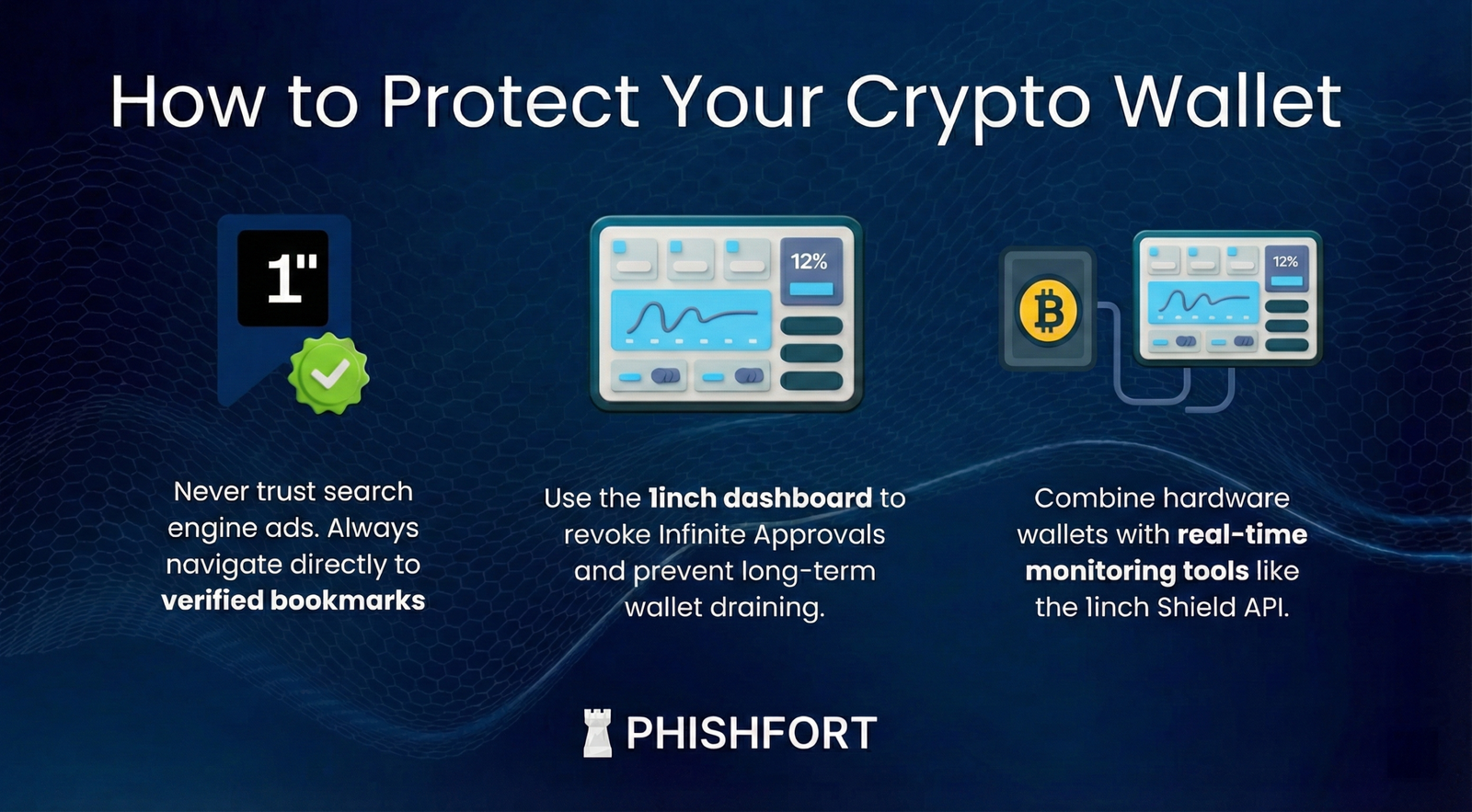
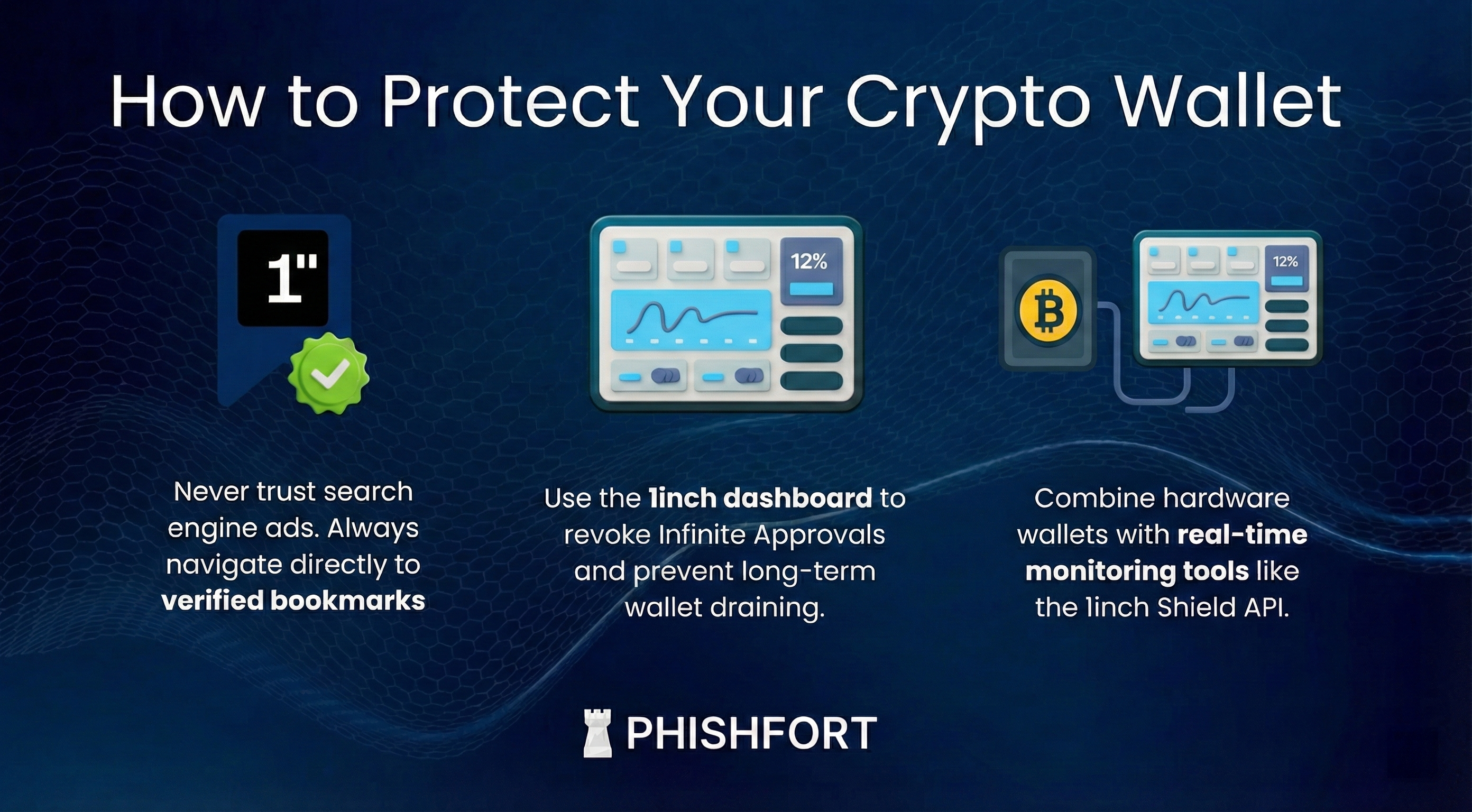
How do you fight back? Always double-check the URL. Seriously. Look at the very end. Is it `.com` or `.org` or something weird? Scammers love slight misspellings, too – like `binance.com` becomes `binance.co` or `binanace.com`. Bookmark your essential sites and only use those bookmarks. Don’t trust links in emails or social media. If you’re unsure, go directly to the official site yourself. You can find more on how to protect your crypto wallet from these slick operations.
Fake Apps & Malware: Danger Lurking on Your Device
Think your phone or computer is safe? Think again. Scammers are pushing fake crypto wallet apps on app stores and pushing malware disguised as legitimate software. You download what you think is a legit wallet, and boom – it’s siphoning off your private keys or sending your transactions to the scammer’s address. This is a nasty one because it’s so insidious.
The defense here is vigilance. Only download apps from official sources. Check the developer. Read reviews (and look for patterns in negative reviews). For hardware wallets, make sure you’re buying directly from the manufacturer or a highly reputable authorized reseller. Never download software updates from unsolicited links. Keep your operating systems and antivirus software up-to-date. A little paranoia goes a long way in this space. Beware of unofficial software.
Social Engineering: Playing on Your Greed and Fear
This is less about tech and more about messing with your head. Scammers are masters of manipulation. They’ll promise you guaranteed high returns (get-rich-quick schemes), tell you you’ve won a giveaway (just send a small ‘fee’ first), or claim your account is compromised and you need to send your crypto to a ‘safe’ address they provide. Pig butchering scams, where someone builds a romantic or friendly relationship with you before convincing you to invest in a fake platform, are brutally effective.
The golden rule? If it sounds too good to be true, it absolutely is. Nobody is giving away free crypto. Legitimate platforms won’t ask you to send funds to a random address for ‘safekeeping’. Be skeptical. If someone pressures you or makes you feel rushed, that’s a massive red flag. Take a breath, do your own research, and if you’re unsure, walk away. Your gut feeling is often your best security tool. Trust your instincts, not a stranger online.
Securing Your Private Keys: The Heart of the Matter
Remember that seed phrase? It generates your private keys. Your private keys are what actually control your crypto. Anyone who has your private keys has your crypto. It’s that simple. With hardware wallets, the keys are generated and stored securely on the device itself, and never exposed to your computer or the internet. That’s the beauty of cold storage security.
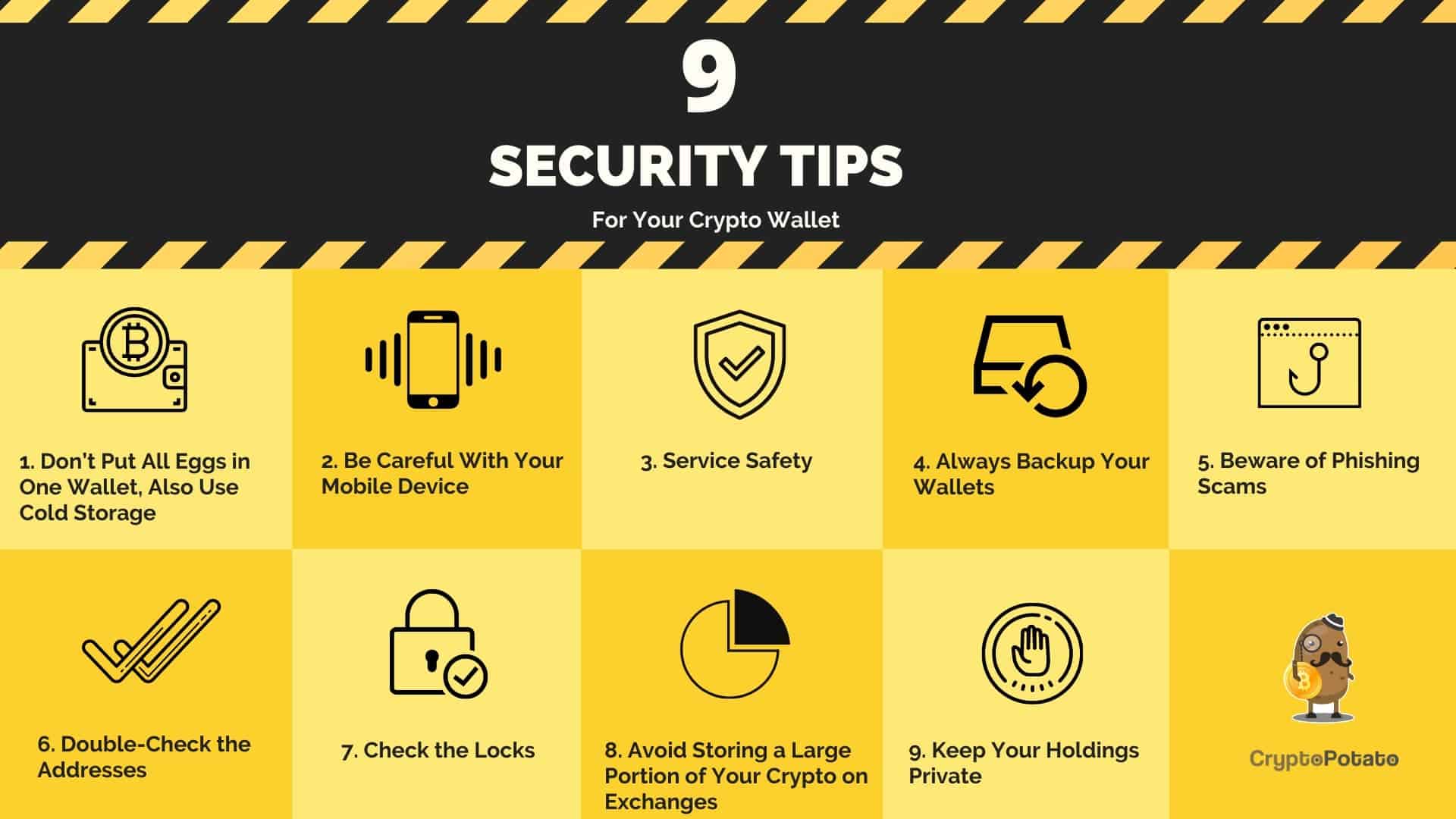
With software wallets, your private keys are stored on your device. This is why device security is crucial. Use strong, unique passwords for your devices. Enable two-factor authentication (2FA) wherever possible. Encrypt your hard drive. The less vulnerable your device, the safer your keys. Consider using multiple wallets for different purposes – a ‘hot’ wallet for small, active amounts and a ‘cold’ wallet for your main holdings. This limits your exposure if one wallet is compromised.
Two-Factor Authentication (2FA): An Extra Layer of Defense
Look, 2FA isn’t foolproof, especially if you’re using SMS-based codes (which can be SIM-swapped). But it’s so much better than just a password. It means even if a scammer gets your password, they still need access to your phone or authenticator app to log in. Think of it as needing two keys instead of just one.
Use an authenticator app like Google Authenticator or Authy whenever possible, rather than SMS. These apps generate time-based codes that are much harder to intercept. Set it up on all your exchange accounts and any wallet that offers it. It’s a quick win for vastly improved security. Don’t skip this step. Ever. It’s one of the easiest ways to add a critical security layer.
Source : cryptopotato.com
Hardware Wallets: The Gold Standard for Serious Holdings
If you’re holding more than a few hundred bucks in crypto, you really should be looking at a hardware wallet. Brands like Ledger and Trezor are the industry leaders. These devices are specifically designed to keep your private keys offline. When you want to make a transaction, you coect the device (usually via USB) and approve the transaction directly on the hardware wallet itself. Your private keys never touch your internet-coected computer.
It might seem like an extra hassle, but the security benefits are immense. It’s the difference between leaving your cash on the kitchen counter or locking it in a bank vault. For long-term crypto investors, this is non-negotiable. You can learn more about crypto wallet security and practical guides at this crypto wallet security explained resource.
Regular Audits and Monitoring: Stay Vigilant
You wouldn’t just deposit money and never check your bank balance, right? Same applies to crypto. You need to regularly check your wallet balances and transaction history. Look for anything suspicious. Did a transaction happen that you didn’t authorize? Is the balance lower than it should be?
Use blockchain explorers (like Etherscan for Ethereum) to monitor your public address. While you can’t stop someone from seeing transactions on a public blockchain, you can spot unauthorized activity quickly. Set up alerts if your exchange offers them. Consistent monitoring is key to catching problems before they become catastrophes. Don’t just set it and forget it.
Device Security: Your Computer and Phone Are Attack Vectors
We already touched on this, but it bears repeating. Your computer and smartphone are gateway devices. If they’re compromised, your wallets and keys are at risk. Keep your operating systems updated. Use reputable antivirus and anti-malware software. Be extremely cautious about what you download and install. Avoid public Wi-Fi for sensitive transactions – stick to secure, private networks.
And for goodness sake, use strong, unique passwords for your devices and enable biometric security like fingerprint or facial recognition. Lock your devices when you’re not using them. A stolen or lost device can be a goldmine for a thief if it’s not properly secured. Protect your devices as fiercely as you protect your crypto.
Beware of Giveaways and ‘Too Good to Be True’ Offers
This is a classic social engineering tactic. You’ll see a tweet or a video from a famous crypto personality (or someone impersonating one) promising to double your Bitcoin or send you free Ethereum if you send them some first. They’ll say, “Send 1 BTC, get 2 BTC back!
Let me be blunt: this is a scam, 100% of the time. There are no legitimate giveaways like this. If you send them crypto, it’s gone. They prey on people’s greed and hope. Always remember the fundamental rule: if someone is asking you to send them crypto first in exchange for a larger return, it’s a trap. Always. Never trust crypto giveaways that ask for an upfront deposit.
Secure Backups Are Essential
We talked about seed phrases, but let’s broaden this. What about backups of your wallet files themselves (for software wallets) or even your encrypted seed phrase backups? These need to be handled with extreme care. If you’re using a hardware wallet, the primary backup is your seed phrase, which should be stored securely offline. For software wallets, you might have a wallet file (`wallet.dat` in Bitcoin Core, for example) that needs backing up.
Encrypt these backup files with a strong password. Store them in multiple, secure, offline locations. Think fireproof safes, secure USB drives stored separately, maybe even a secure offsite location for your most critical backups. The goal is redundancy and security. You don’t want a single point of failure. Redundant, secure backups are your insurance policy against hardware failure or data loss.

Source : vocal.media
Multi-Signature Wallets: Sharing is Caring (and Secure)
For businesses, organizations, or even families managing shared crypto funds, multi-signature (multi-sig) wallets are a game-changer. Instead of requiring just one private key to authorize a transaction, a multi-sig wallet requires a set number of keys out of a larger pool. For example, a 2-of-3 setup means you need any two of the three designated keys to sign off on a transaction.
This adds a huge layer of security. It prevents a single point of failure (if one key is lost or compromised, funds are still safe if you have enough other keys) and allows for shared control and oversight. It’s more complex to set up but incredibly powerful for enhancing security and collaboration. Multi-sig is robust for shared assets.
The Human Element: Education and Awareness
Ultimately, the strongest security is an educated user. These scams are designed to exploit a lack of knowledge or a moment of panic. The more you understand how these threats work, the better equipped you’ll be to spot them.
Stay informed. Follow reputable crypto news sources. Engage with security-focused communities (but be wary of DMs!). Understand the basics of blockchain and how transactions work. The crypto space is constantly evolving, and so are the threats. Continuous learning is your best defense. Staying educated is critical.
Final Thoughts: Stay Sharp, Stay Secure
Protecting your crypto isn’t a one-time task; it’s an ongoing commitment. It requires vigilance, a healthy dose of skepticism, and the right tools. Use hardware wallets for significant amounts, protect your seed phrase like it’s the password to your soul, be suspicious of unsolicited offers, and always double-check everything. The crypto market offers incredible opportunities, but it also demands respect for its inherent risks. By taking these steps, you drastically reduce the chances of becoming another cautionary tale.
Don’t let the fear paralyze you. Use it as motivation to be smarter, more cautious, and more secure. Your digital future depends on it. Secure your crypto today.
Frequently Asked Questions
-
Can the FBI track a Bitcoin wallet?
Yeah, they can track Bitcoin wallet activity, but it’s not like tracking a person with an ID. Bitcoin transactions are public on the blockchain. So, they can see where BTC moves from wallet address A to wallet address B. If they can link a wallet address to a real-world identity – maybe through an exchange that requires KYC (Know Your Customer) or by tracing funds through mixers – then yes, they can track it back to a person. It’s not instant or easy, but blockchain analysis tools give them a lot of power.
-
How do I choose the right crypto wallet for me?
It really boils down to how you plan to use your crypto. If you’re actively trading small amounts, a mobile or browser-based hot wallet is convenient. But if you’re holding significant amounts for the long term, a hardware wallet (cold storage) is a must. Think about ease of use versus the value of what you’re storing. Never store large sums in a hot wallet.
-
What's the biggest mistake people make with crypto security?
Honestly? It’s complacency or over-trust. People get lazy with their seed phrases, click suspicious links, or trust random people online who promise to help them. The biggest mistake is thinking ‘it won’t happen to me.’ Never underestimate the sophistication of scammers, and always protect your seed phrase like your life depends on it – because your crypto does.
-
Are exchange wallets safe to keep my crypto in?
Exchanges like Binance or Coinbase offer convenience, but keeping large amounts of crypto there long-term is risky. They are essentially custodial wallets – you don’t truly control the private keys. Exchanges are targets for major hacks. While they have security measures, if the exchange gets hacked, your funds could be lost or tied up indefinitely. It’s generally safer to move significant holdings to a personal hardware wallet where you control the keys.
-
What are some specific examples of crypto scams I should watch out for?
Beyond phishing and fake giveaways, watch out for ‘rug pulls’ where developers abandon a new crypto project after taking investors’ money. ‘Pig butchering’ scams, where someone builds a fake relationship to trick you into investing, are brutal. Also, beware of fake customer support on social media who offer to ‘help’ with your account issues – they’ll just try to steal your info or seed phrase. Always do your own research and be wary of unsolicited help.