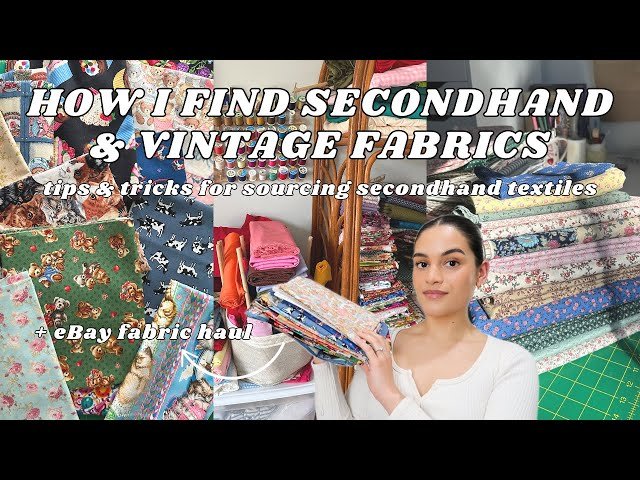
Vintage Sourcing: How to Spot Quality Fabrics
Alright, let’s cut to the chase. You’re hitting up the thrift stores, maybe trolling online marketplaces, looking for those killer vintage finds. But how do you really know if that old garment is a gem or just… old? It all comes down to the fabric. Seriously. Forget the brand name for a sec; the material tells the real story. Get this wrong, and you’re stuck with something that looks cheap, feels scratchy, or falls apart after one wash. Nobody wants that. We’re talking about finding those pieces that feel amazing, drape perfectly, and are built to last. This is your deep dive into spotting the good stuff, the kind of fabrics that have stood the test of time. Pay attention, because this skill is goa make your vintage hunts way more rewarding. It’s about more than just looking cool; it’s about owning pieces with real substance.

Source : youtube.com
The Fabric Feels Right (Literally)
First things first: you gotta use your hands. Don’t just glance. Touch it. Feel the weight. Does it feel flimsy, like it’ll stretch out the second you put it on? Or does it have a satisfying heft? High-quality fabrics often have a certain substance to them. Think about a really good cashmere sweater. It feels substantial, soft, but with presence. Cheap acrylic? Feels plasticky, light, and kinda… dead. Run your fingers over the surface. Is it smooth? Does it have a nice texture? Natural fibers like silk, wool, and high-quality cotton usually have a subtle richness you just can’t fake. Even a well-made linen will feel crisp and substantial, not thin and papery. This initial tactile assessment is gold. It’s your gut check. If it feels cheap, it probably is. Don’t overthink it; your hands know more than you think. Trust that initial sensation.
What’s That Tag Saying? Fiber Content is Key

Source : blog.shopgoodwill.com
Okay, I know, reading the tiny tag can be a pain. But seriously, this is where the gold is buried. Look for those natural fibers. We’re talking 100% silk, wool (merino, cashmere, lambswool), linen, and high-quality cotton (like Pima or Supima). These materials are the backbone of durable, comfortable, and luxurious vintage clothing. Why are they so great? They breathe, they age beautifully, and they just feel better against your skin. Now, don’t immediately dismiss anything with a blend. Sometimes, a bit of synthetic mixed in can add durability or reduce wrinkles (think a wool-poly blend). But be wary of high percentages of polyester, acrylic, or nylon, especially in older garments. Cheap versions of these can pill, snag, and feel like wearing plastic. The exception? Sometimes vintage nylon or rayon (which is semi-synthetic but often feels amazing) can be super high quality and totally worth it. Look for mentions of modal, Tencel, or Lyocell too; these are newer, eco-friendly rayons that feel fantastic. The key is understanding what you’re looking at. A high cotton count in a shirt is usually a good sign. Just avoid that 100% polyester from the 80s that feels stiff as a board.
Weave It or Lose It: Construction Matters
Beyond the fiber itself, how the fabric is constructed makes a huge difference. Hold the fabric up to the light. Can you see straight through it? If it’s super sheer and thin (unless it’s meant to be, like chiffon), that’s often a sign of lower quality. A good weave means the threads are tightly and evenly packed. Look for a consistent texture. Is it smooth and even, or does it look bumpy and irregular? This irregularity can sometimes be a sign of a handwoven fabric, which is often a jackpot, but it can also just mean shoddy manufacturing. Check the weave density. Tightly woven fabrics are generally more durable. Think about denim: good quality denim is tightly woven and heavy. Cheap denim feels thin and almost papery. Also, check for any loose threads or snagged areas. A few stray threads here and there might be fixable, but a widespread issue points to poor construction. Examine the selvage – that finished edge on the side of the fabric roll. Older, well-made garments might have a chain-stitched selvage, a sign of quality. You’re looking for a fabric that feels solid, not flimsy. A good twill weave, a sturdy canvas, or a fine, dense knit all speak to quality. It’s all about how the threads are put together to create the final cloth.
The Natural Aging Process: Signs of Quality
This might sound counterintuitive, but sometimes, the way a fabric ages is a direct indicator of its quality. Natural fibers, especially wool and cotton, tend to age gracefully. They might soften over time, develop a lovely patina, or show signs of wear that actually add character rather than looking like damage. Think about a beloved old wool sweater that’s become incredibly soft and cozy. That’s quality aging. Conversely, cheap synthetics often look worse with age. They pill, they fade unevenly, they lose their shape, and they can develop a shiny, worn-out look that’s just… sad. Look for subtle signs: a slight softening of the fabric, a gentle fading that looks intentional, or a patina that suggests the garment has been well-loved and well-made. Excessive pilling (those little balls of fuzz) is almost always a red flag, especially on natural fibers. That’s usually a sign of shorter, lower-quality fibers being used or a poorly constructed knit. Conversely, a garment that still looks remarkably good after decades, even with minor signs of wear, is a testament to good fabric longevity. It’s about how the material holds up over time, not just how it looks fresh off the rack.
Know Your Brands (and Their Eras)

Source : countryliving.com
Okay, so we’re talking vintage, right? This means understanding that brand reputations have changed. A brand that made high-quality garments decades ago might be churning out fast fashion now. Do a quick mental check (or a phone search if you’re really curious) on the brand name, especially if it’s unfamiliar. What era is it likely from? Mid-century pieces from reputable labels are often incredibly well-made. Think labels like Pendleton, L.L. Bean (from back in the day), Brooks Brothers, or even certain designer labels from the 60s and 70s. They used superior materials and construction techniques. Conversely, if you see a brand that’s known for cheap, trendy clothing now, even if the garment looks okay, be extra critical. It might just be an older piece from a brand that’s always been low-quality, or it could be a more recent item that’s already starting to fall apart. Sometimes, just knowing the general era of a piece gives you a clue. 70s disco-wear might be polyester, sure, but it was often well-made polyester. 90s grunge might be flael, but high-quality flael. It’s about associating quality labels with eras. Don’t assume; do a little digging if you’re unsure. A quick Google search can tell you a lot.
Drape and Fit: How It Hangs Matters
This is where fabric quality really shows itself. How does the garment hang on your body, or even just on the hanger? Does it drape fluidly, falling in soft folds? Or does it look stiff and boxy, holding its shape in an unflattering way? High-quality fabrics, especially silks, rayons, fine wools, and even well-made cottons, have a beautiful drape. They move with you, accentuating your shape. Think of a bias-cut silk dress – it flows and clings in all the right places because of the silk’s natural fluidity. Cheap fabrics, particularly stiffer polyesters, often hang awkwardly. They can look stiff, create weird bulges, or just generally not lie smoothly against the body. When you pick up a garment, give it a gentle shake. Does it fall nicely, or does it look like it’s made of cardboard? This ‘drape’ is a subtle but powerful indicator of the fabric’s quality and composition. Even a simple t-shirt made from high-quality Pima cotton will have a better drape than one made from cheap, coarse cotton. It’s the difference between looking put-together and looking… sloppy. A great drape is a sign of good material choice.
The Light Trick: A Quick Transparency Test
Here’s a little trick I learned that’s surprisingly effective, especially for identifying quality knits or lighter-weight wovens. Hold the fabric up to a strong light source (like a window or a bright lamp). If the light passes through evenly and the fabric maintains its integrity, that’s usually a good sign. If you can clearly see the weave structure and there are thin spots or significant light filtering through in irregular patches, it might indicate a lower-quality fabric or one that’s already starting to break down. This is particularly useful for cotton shirts or wool sweaters. A tightly knit, high-quality wool sweater will diffuse the light evenly. A cheap acrylic knit might show obvious holes or thin patches where the light punches right through. It helps you spot those uneven tensions in the weave or knit that cheaper materials often exhibit. It’s a simple visual check that can reveal a lot about the fabric’s density and consistency. Think of it as stress-testing the material visually. A consistent light diffusion often means quality.
Beyond the Fabric: Stitching and Seams
Watch: Vintage Fabric Haul! Plus how to tell if it's vintage fabric?
While we’re focused on fabric, you can’t ignore the construction details. High-quality fabrics are usually paired with high-quality construction. Look closely at the seams. Are they straight and even? Is the stitching tight and consistent, with no skipped stitches or loose threads? Cheap garments often have wide, sloppy seams with uneven stitching. Professional tailoring usually involves finer, more durable stitches. Check the hems, too. Are they neatly folded and securely stitched? Sometimes, you’ll find double-stitched seams or felled seams (where the seam is enclosed within itself) – these are hallmarks of durability. Also, peek inside. Are the ier seams finished neatly (serged or bound), or are they raw and fraying? Raw seams on older, well-made garments are rare; they usually indicate a higher level of care in manufacturing. Even linings matter. A good quality silk or Bemberg rayon lining is a great sign. If the lining feels cheap and plasticky, it might hint at the overall quality. Pay attention to the stitch density and seam finishing. It all tells a story about the garment’s overall quality.
Common Vintage Fabric Pitfalls (and How to Avoid Them)
So, we’ve talked about the good stuff. Now, let’s address the potential traps. The biggest villain? Cheap, low-grade polyester, especially from the 70s and 80s. It can look okay initially, but it often feels stiff, doesn’t breathe, and pills like crazy. Unless it’s a specific style (like a cool 80s blazer where the structure is key), I usually steer clear of stiff, shiny polyester. Another one? Blends with a very high percentage of acrylic or nylon. Unless it’s a specific vintage knit that uses them well, these can be scratchy and prone to static. Also, watch out for fabrics that look too perfect. Sometimes, a brand-new-looking vintage item made of synthetic material might just be… well, cheap synthetic material that hasn’t been worn much because it wasn’t pleasant to wear. Look for signs of wear that enhance the fabric, not degrade it. Pilling is a major red flag. If a garment is covered in pills, even if it’s a natural fiber, it suggests lower-quality fibers or a weak yarn. Think of it as fabric shedding its structure prematurely. And finally, anything that feels overly stiff or has a chemical smell that doesn’t dissipate after airing? Probably best left on the rack. Your nose knows.
My Personal Picks: Fabrics I Always Snag
When I’m hunting, certain fabrics make my heart beat faster. 100% Silk is always a win. Whether it’s charmeuse, crepe de chine, or raw silk, it drapes beautifully and feels incredible. You can find amazing blouses, dresses, and even linings. Next up: High-quality Wool. Think merino, cashmere, lambswool. These feel so luxurious, keep you warm without overheating, and last forever. A well-made wool blazer or a cozy cardigan? Chef’s kiss. Linen is another favorite, especially for summer. It’s breathable, gets softer with every wash, and has that effortlessly chic vibe. Just be prepared for wrinkles; that’s part of its charm. I also have a soft spot for Good Quality Cotton – Pima, Supima, Egyptian cotton. They make for fantastic shirts, dresses, and loungewear that are soft and durable. Lastly, don’t underestimate well-made rayon or viscose from reputable vintage eras. When done right, these semi-synthetics have a gorgeous drape and silky feel that’s hard to beat. These are the fabrics that make a vintage piece feel truly special and worth the hunt.
A Quick Guide to Fabric Care for Vintage Finds
Source : sourceoffabric.com
Once you’ve scored that amazing piece with the quality fabric, you gotta take care of it, right? Washing instructions on vintage tags are often… optimistic. For delicate natural fibers like silk and fine wool, handwashing in cold water with a gentle detergent is usually the safest bet. You can find some great gentle soaps specifically for delicates online. For cottons and linens, they can often handle a gentle machine wash cycle in cold water, but always check for colorfastness first (dab a hidden seam with a wet white cloth). Avoid hot water; it can cause shrinkage and damage fibers. Never, ever put wool or silk in a hot dryer – the heat is their enemy! Air dry flat or on a hanger, away from direct sunlight, which can fade colors. For stubborn wrinkles on natural fibers, a steamer is your best friend. It’s gentler than ironing. And when in doubt? Take it to a professional dry cleaner who specializes in vintage or delicate garments. Proper care ensures that those quality fabrics continue to look and feel amazing for years to come. Treat them right, and they’ll be with you forever.
Final Thoughts: Trust Your Gut (and Your Hands)
Sourcing vintage is an art, and mastering fabric quality is a huge part of it. It’s not just about spotting a bargain; it’s about finding pieces that have inherent value, that feel good to wear, and that tell a story. Use your senses – touch, sight, even smell. Learn to recognize the difference between a fabric that’s cheap and flimsy and one that’s simply lightweight but well-constructed. Pay attention to the tags, but don’t let them be the only deciding factor. The way a garment drapes, the quality of the stitching, and how it has aged all contribute to the picture. With practice, you’ll develop an instinct for it. You’ll walk into a store and just know where the good stuff is hiding. Keep hunting, keep learning, and soon you’ll be a fabric-spotting pro. Happy thrifting!
Frequently Asked Questions
How to tell if a fabric is high quality?
Honestly, it’s a mix of things. Start by feeling the fabric. Does it feel substantial, smooth, and pleasant against your skin, or thin and plasticky? Then, check the tag – natural fibers like silk, wool, high-quality cotton, and linen are usually a good sign. Hold it up to the light; a consistent, dense weave is better than something see-through and loose. Also, look at how it drapes; quality fabrics move fluidly. Finally, check the stitching and construction – neat, tight seams are a must. It’s like putting together clues!
What are some thrifting red flags?
Oh man, plenty! Big ones include excessive pilling (those little fuzzy balls), especially on natural fibers – that screams cheap material or wear and tear. Stiff, shiny polyester that feels like plastic is usually a no-go unless it’s a specific style piece. Any garment that smells strongly of chemicals and doesn’t air out? Run. Also, look out for uneven, sloppy stitching, loose threads everywhere, and fabrics that feel overly thin or papery when they shouldn’t. Basically, anything that looks or feels like it’s already falling apart or was poorly made from the start is a red flag.
Is vintage rayon good quality?
Sometimes, yes! Vintage rayon, also known as viscose, can be incredibly high quality. Unlike modern, cheaper versions that can sometimes feel flimsy or pill easily, older rayon was often made with more care. It’s known for its beautiful drape and silky feel, often mimicking silk but at a lower price point. If you find a vintage piece made of 100% rayon that feels substantial, drapes beautifully, and has neat construction, it’s often a fantastic find. Just like with any fabric, check the overall construction and feel to be sure.
How important is the fabric’s ‘hand’?
Super important! The ‘hand’ of a fabric is basically how it feels to the touch – its softness, smoothness, crispness, or coolness. A good ‘hand’ is a huge indicator of quality. Think about a beautiful silk charmeuse versus a cheap polyester satin. The silk feels cool, smooth, and fluid; the polyester might feel slick but have a certain stiffness or warmth. High-quality natural fibers and well-made semi-synthetics generally have a superior hand that makes them a pleasure to wear. It’s often the first thing you notice when you pick up a truly quality garment. If it feels unpleasant or ‘off’ against your skin, it’s usually not worth the hassle, no matter how cute it looks.
Should I avoid all synthetic fabrics when thrifting?
Not necessarily! While cheap polyester, acrylic, and nylon are often things to watch out for (they can feel plasticky, pill easily, and don’t breathe well), not all synthetics are created equal. Vintage nylon, for example, can be incredibly durable and was used in high-quality items like sturdy windbreakers or smooth linings. Some older rayons (viscose) are fantastic, as mentioned. Even certain polyesters from specific eras, like some 80s structured jackets, were designed to hold a shape that only polyester could achieve effectively. The key is to be critical. Assess the specific fabric, not just the fiber type. Does it feel surprisingly good for a synthetic? Does it have a unique quality or purpose? If it feels cheap, looks shiny in a bad way, or pills easily, then avoid it. But don’t dismiss all synthetics outright; there are gems to be found.