The Crazy Ride of Social Media Algorithms
Where We Started: The Wild West of Social Feeds
Source : medium.com
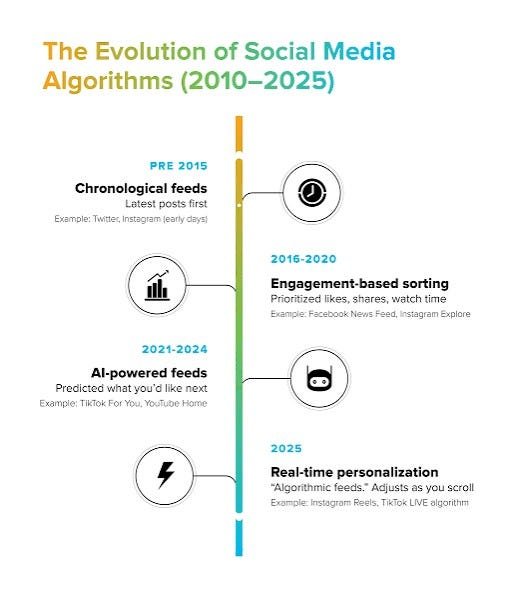
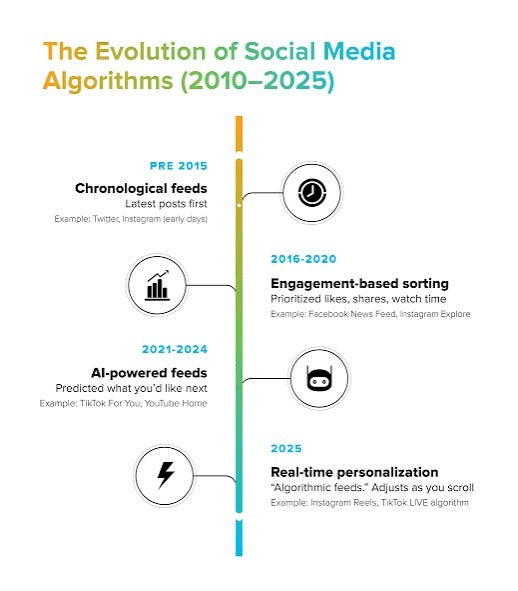
Remember when Facebook just showed you stuff chronologically? Yeah, me neither. It feels like a lifetime ago. Back then, you saw posts from your buddies, maybe a brand or two, and that was it. Simple. Predictable. Now? It’s a whole different beast. Social media algorithms have gone from simple sorting tools to sophisticated engines that decide what you see, when you see it, and frankly, what you think. It’s a wild evolution, and honestly, a little terrifying if you stop and think about it.
It wasn’t always this complicated. Back in the day, the social media landscape was pretty basic. You logged on, you scrolled, you saw what your friends posted. No fancy sorting, no ‘recommended for you’ rabbit holes. Just pure, unadulterated timeline. Easy peasy. But then, the platforms started to grow. And grow. And grow some more. With millions of posts flooding in every second, chronological became… unmanageable. Something had to change. And boy, did it.
The Big Shift: From Chronological Chaos to Calculated Content
Source : reddit.com
So, what triggered this massive algorithmic overhaul? More users. More content. More money. It’s always about the money, right? When platforms realized they could keep you hooked longer by showing you stuff you might like, instead of just what happened first, the game changed. They wanted to keep you scrolling, clicking, commenting – anything to serve up more ads. And to do that, they needed smarter systems. Systems that could predict your desires better than you could yourself.
This is where we started seeing the first real attempts at content curation. Instead of just presenting posts in the order they arrived, platforms began experimenting with ranking. They looked at who you interacted with, what kind of posts you liked, and how long you spent looking at certain things. It was like a digital bartender deciding what drink to pour you next based on your last order. A bit creepy, maybe, but effective for keeping eyeballs glued.
Key Milestones in Algorithm Evolution
The Dawn of Engagement Metrics
Early on, it was all about “engagement signals.” Likes, comments, shares – these were the gold stars of the algorithm. If a post got a lot of these early on, the algorithm figured, “Hey, people must like this!” and showed it to more people. Simple, right? It was less about what you wanted to see and more about what was getting the most reaction. This led to a lot of clickbait and emotionally charged content rising to the top.
The Rise of Relationship Weighting
Then came the realization that your relationship with the poster mattered. Facebook, in particular, started prioritizing posts from close friends and family. The idea was to make the feed feel more personal. If you commented on a friend’s photo, the algorithm learned that your connection was strong. Suddenly, your mom’s vacation pics might appear before a viral news story. It was an attempt to bring back that “friends and family” feel, though whether it succeeded is debatable.
The Introduction of Content Type Preference
Video started taking over. Photos got their own boosts. Link posts? Not so much. Algorithms began to understand the different types of content and what users preferred to consume. Platforms started pushing videos harder because people watched them longer. This directly influenced what creators focused on and led to the explosive growth of video content on almost every platform.
Personalization Gets Serious (and a Little Scary)
This is where things got truly sophisticated. Algorithms started analyzing not just your direct interactions, but also your viewing habits, your search history (even off-platform!), and even how long you paused on a particular image or video. They built incredibly detailed profiles to predict what would keep you scrolling. It’s this era that really cemented the “filter bubble” effect. You see more of what you already like, and less of anything that challenges your views.
The AI Infusion: Machine Learning Takes Over
Now? We’re deep into machine learning. Algorithms aren’t just following rules; they’re learning and adapting on the fly. They use complex models to predict user behavior with frightening accuracy. This isn’t just about showing you popular posts; it’s about predicting your mood, your interests, and even your purchasing intent. This ongoing “algorithmic intelligence” is what drives the feeds today.
This whole journey, from simple sorting to complex AI prediction, is a fascinating look at how technology evolves to meet business goals. The platforms want to keep you engaged, and the algorithms are their tool for doing just that. You can read more about this journey over at this insightful breakdown.
De-influencing: Valuing Honesty Over Ads

Source : adweek.com
The Backlash Against Perfection
Look, we’ve all been there. Scrolling through perfectly curated feeds, feeling like our own lives don’t measure up. This constant pressure to be flawless? It’s exhausting. People are tired of seeing airbrushed realities and are craving somethingreal. This isn’t just a trend; it’s a full-blown rebellion against the unrealistic standards social media has pushed for years. The de-influencing movement is basically saying, “Enough is enough.
Authenticity Sells More Than Sparkle
Think about it. When a creator gets real about a product – its flaws and all – don’t you trust them more? Exactly. This shift isn’t accidental. Brands are starting to realize that consumers are catching on. They’re not falling for the overly polished, all-positive reviews anymore. A genuine, even slightly critical, take resonates way more deeply. It builds a stronger connection than any slick advertisement ever could. It’s about relatable experiences, not unattainable perfection.
Why “Ugly” Content Wins
This is where the “ugly” content movement really shines. It’s raw. It’s unedited. It’s often shot on a phone, maybe with shaky hands. And you know what? That’s its superpower. It feels like a friend giving you advice, not a corporation trying to sell you something. This approach cuts through the noise. It’s memorable because it doesn’t look like everything else. It’s the digital equivalent of a handwritten note in a world of form letters. This is what the algorithm is starting to favor.
How Video Algorithms are Prioritizing “Ugly” Raw Content
Source : linkedin.com
Forget the Hollywood Gloss
Remember when every video had to look like it was shot by a professional? Yeah, those days are fading fast. Platforms like TikTok and Instagram Reels are basically screaming, “Give us your lo-fi, your imperfect, your perfectly imperfect!” They’re pushing videos that feel spontaneous and unpolished. Think shaky camera work, bad lighting, maybe even a stray hair or two. It’s a stark contrast to the carefully produced content of yesteryear, and honestly, it’s kind of refreshing.
The Rise of the Relatable Creator
What does this mean for creators? It means you don’t need fancy equipment anymore. Your smartphone is your best friend. It means ditching the ring light and embracing natural light (even if it’s a bit dim). The focus is on the message and the personality, not the pristine production value. This democratizes content creation, allowing more voices to be heard. It’s less about looking good and more about being good – good at storytelling, good at connecting, good at being… you.
Engagement Over Aesthetics
Why are the algorithms loving this raw stuff? Because it works. This kind of content tends to get more shares, more comments, and more watch time. Why? Because it feelshuman. It sparks conversations. It makes people feel seen. When you watch a video that feels like it was made by someone just like you, you’re more likely to engage. That engagement is the golden ticket for social platforms. They want users spending time on their sites, and relatable, unpolished videos are incredibly sticky.
Navigating Chronological Feeds vs. Algorithmic Curation

Source : cepr.org
The Good Old Days of Order
Remember when your feed showed you posts in the exact order they were published? It felt… organized. You didn’t miss a thing. This was the original social media experience for many of us. Seeing posts from your friends first, then brands, then everyone else – it was simple. A chronological feed meant you were in control. You knew what you were seeing and when you were seeing it. No guessing games, no hidden agendas from the algorithm.
Enter the Algorithm: The Gatekeeper
Then came the algorithms. Suddenly, your feed became a curated suggestion box. The platforms decided what they thought you wanted to see, based on your past behavior. While this can sometimes surface interesting content, it also means you’re at the mercy of their programming. You might miss important updates from close friends because the algorithm decided a stranger’s cat video was more “engaging.” It’s a trade-off: convenience versus complete control.
Finding Your Feed Sweet Spot
So, what’s the solution? It’s not necessarily choosing one over the other entirely. Many platforms now offer options. You can often toggle back to a chronological view if you miss it. Or, you can try to “train” the algorithm by actively engaging with the content you do want to see. It’s a constant dance. Learning to work with, or around, the algorithm’s preferences is key to not feeling overwhelmed or out of the loop. It requires a bit of active management from your end.
The Shift to Niche, Invite-Only Social Platforms
Source : marieennisoconnor.medium.com
Escape the Noise
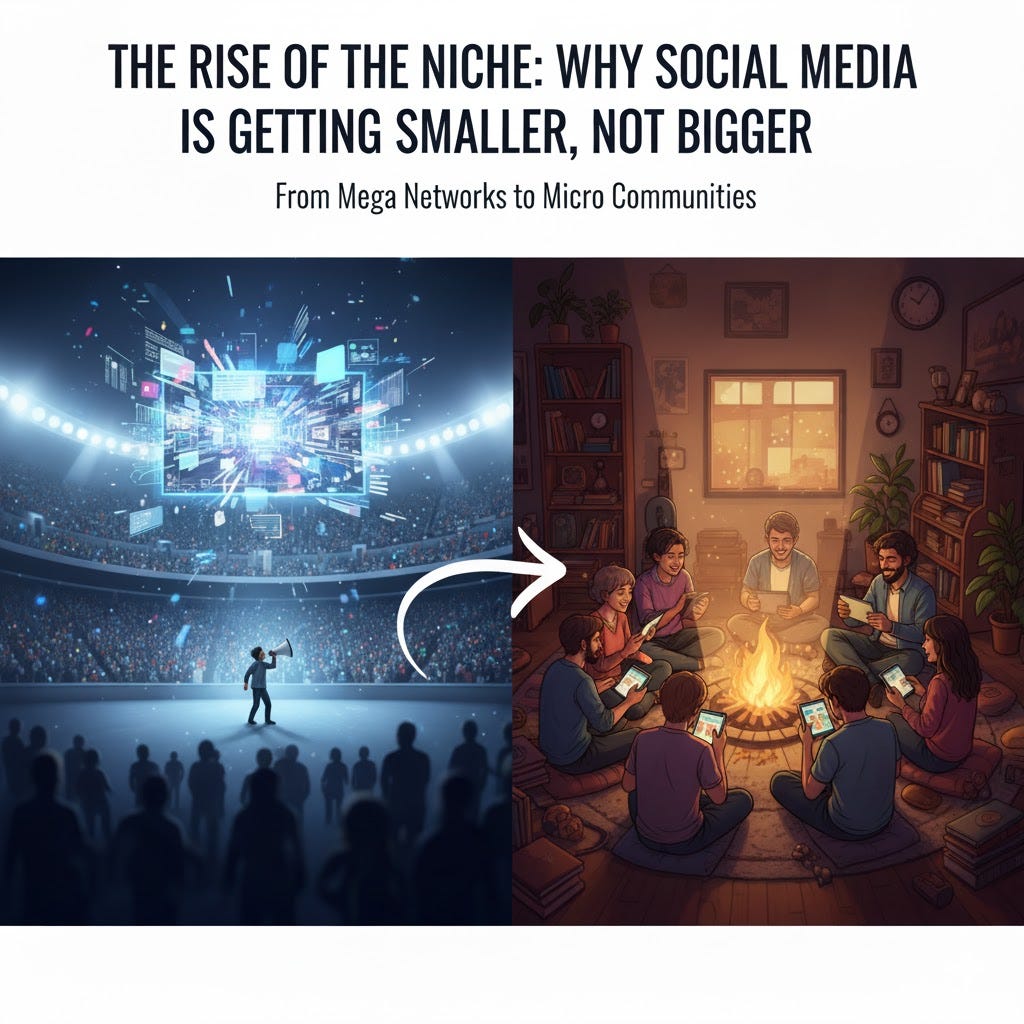
Let’s be honest, the big social networks can feel like a chaotic circus sometimes. Endless scrolling, constant notifications, and a general sense of overwhelm. This is why people are flocking to smaller, more exclusive spaces. Think of it like finding a quiet speakeasy in a loud city. These niche platforms offer a refuge. They’re designed for specific communities, interests, or even just a closer circle of friends. The vibe is more intimate, more focused.
Quality Over Quantity, Always
The allure of invite-only communities is simple: exclusivity. It means the people there are supposed to be there, often vetted or invited by existing members. This naturally leads to higher quality interactions. Less spam, less trolling, more genuine conversation. Platforms like Geneva or even private Discord servers have become havens for people tired of the broad-strokes approach of mainstream social media. It’s about building meaningful connections with like-minded individuals, not just accumulating followers.
The Future of Digital Belonging
This trend signals a bigger shift in how we think about online community. We’re moving away from the idea of one giant digital town square towards a collection of smaller, curated villages. Each serves a specific purpose and attracts a specific crowd. It’s about finding your tribe, your people, without having to wade through tons of irrelevant content. The future of social might just be smaller, more intentional, and a lot more personal.
How SEO is Overtaking Hashtags on Social Media
Source : digitalmarketingphilippines.com
Hashtags: Once Mighty, Now… Meh?
Remember the golden age of hashtags? They were everything. The key to discoverability. You’d rack your brain for the perfect combination to get your post seen by millions. Now? They’re still around, sure, but their power has waned. It’s like comparing a horse and buggy to a Tesla. Hashtags are becoming less about broad reach and more about specific categorization within a platform. Think niche communities, not mass appeal.
Google’s Influence on Social
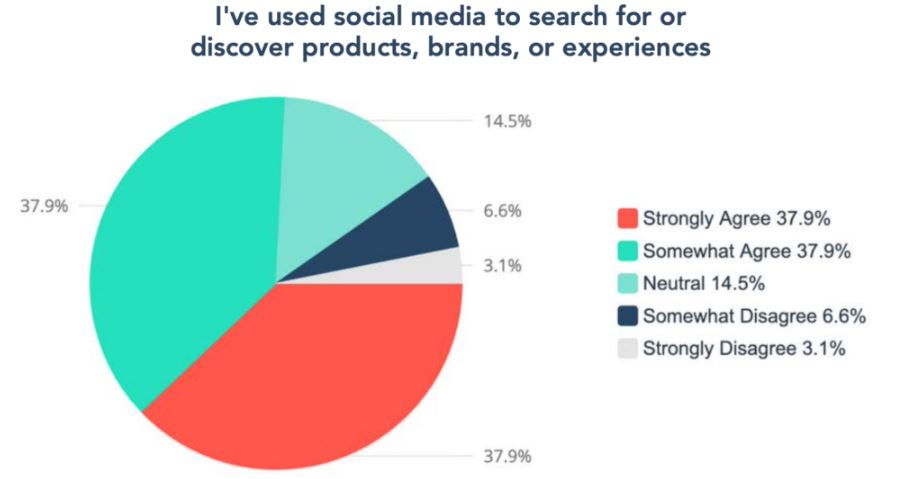
Here’s the kicker: Google owns YouTube, and they’re increasingly integrating search principles across their social ventures. This means that what you post is being evaluated much like a blog post or a webpage. Keywords, relevance, and search intent are becoming king. Users are searching directly on platforms like Instagram and TikTok for answers and information, not just browsing. Your content needs to be searchable, plain and simple. This is a massive change.
Social Media Algorithm Searchability: Then vs. Now
| Feature | Era of Hashtags (Approx. 2010-2020) | Era of SEO & Keywords (Approx. 2021-Present) |
|---|---|---|
| Primary Discovery Tool | Broad, trending hashtags (e.g., #travel, #foodie) | Specific keywords in captions, titles, and even spoken words (via transcriptions) |
| Content Focus | Visually appealing, trending aesthetics | Informative, keyword-rich, problem-solving content |
| Algorithm Goal | Maximize engagement (likes, shares, comments on trending topics) | Maximize relevance and user satisfaction based on search intent |
| Creator Strategy | Hashtag stacking, chasing trends | Keyword research, content optimization, building authority |
| Platform Example | Instagram, Twitter | YouTube, TikTok, Pinterest (increasingly others) |
Keywords are Your New Best Friend
So, what does this mean for you? Stop thinking solely in hashtags and start thinking in keywords. What terms would someone actually type into a search bar to find your content? Use those terms naturally in your captions, your video titles, even in your spoken words within videos. Platforms are getting smarter at transcribing audio and analyzing text. Getting your content found now depends less on a lucky hashtag and more on strategic keyword placement.
Frequently Asked Questions
-
How have social media algorithms evolved?
Man, it’s been a wild ride. Back in the day, feeds were chronological. You saw stuff as it was posted. Then, platforms realized they could show you more of what they thought you’d like, keeping you hooked. That meant shifting to engagement-based sorting – likes, comments, shares became king. Now? It’s way more complex. They’re looking at dwell time, who you interact with most, even what you don’t interact with, trying to predict your every move. Think personalized bubbles, sometimes for better, often for worse. It’s all about keeping eyeballs glued to the screen for maximum ad revenue.
-
What are the 7 types of algorithms?
Okay, calling them ‘7 distinct types’ is a bit of a stretch, and platforms keep ’em secret. But generally, you see a few main flavors at play:
First, there’s the engagement algorithm, which prioritizes posts getting lots of likes and comments. Then you have content-based filtering, where the algorithm looks at the topic of the post to match it with your interests. Relationship-based algorithms are big too, showing you more from people you actually talk to. Then there are algorithms focused on recency, timing, and user data (like location or past behavior). Some also use machine learning to predict what you’ll click next. It’s usually a mix of all these, tweaked constantly. They’re not usually just one type.
-
Why do social media algorithms keep changing?
Honestly? To make more money. The platforms are businesses. They need to keep you scrolling, clicking, and watching ads. When they notice users aren’t engaged, or if a competitor figures out a better way to keep people hooked, they’ll tweak their algorithms. It’s a constant arms race. Plus, user behavior changes! What worked yesterday might not work today. They’re always experimenting to find that sweet spot that maximizes your time on their site.
-
Can I 'trick' the algorithm?
People try, bless their hearts. Some focus on getting tons of engagement early on, hoping that ‘boosts’ them. Others try to game the system by using specific keywords or hashtags they think the algorithm favors. But here’s the kicker: the algorithms are designed to get smarter and catch on. Trying to ‘trick’ them often backfires, especially if your content feels spammy or inauthentic. The best bet? Focus on making genuinely good content that your audience actually wants to see. Authenticity still wins, usually.
-
What's the future of social media algorithms?
Get ready for even more personalization. We’re likely going to see algorithms get scarily good at predicting what you want before you even know it yourself. AI and machine learning are only going to get more advanced. Expect even deeper dives into your behavior, potentially leading to more curated (and maybe even more isolated) online experiences. The debate between showing you what you want versus what you need to see will only get louder. It’s going to be a constant push and pull between user experience and platform monetization.