How to Spot Greenwashing in 2026 Marketing
Alright, let’s cut the crap. You’re seeing it everywhere, aren’t you? That vague promise of ‘eco-friendly,’ that picture of a leaf that looks suspiciously like it was photoshopped on. Companies are shouting about how green they are, but are they really? In 2026, the greenwashing game is getting more sophisticated, and honestly, more aoying. It’s like they think we’re all a bunch of clueless consumers who’ll just buy whatever has a recycling symbol on it. Nope. Not anymore. We need to get smarter. We need to call out the fakes. This isn’t just about buying better; it’s about demanding honesty.
Source : thesustainableagency.com
The Smokescreen: What Exactly IS Greenwashing?
So, what’s the big deal? Greenwashing is basically a company’s attempt to look more environmentally responsible than they actually are. Think of it as marketing spin, but for the planet. They’ll slap a green label on a product that’s only slightly less harmful, or talk up a tiny, insignificant eco-initiative while their main operations are polluting up a storm. It’s a deceptive marketing tactic designed to mislead you into thinking you’re making a good choice. It’s like putting a tiny ‘low-fat’ sticker on a candy bar. Technically true, but totally misleading, right?
Why do they do it? Simple. Money. And reputation. In 2026, consumers, especially younger ones, are clued in. They want to support brands that align with their values. A reputation for sustainability is gold. But actually being sustainable? That’s hard. It costs money, it requires real change. So, some companies take the shortcut. They buy the green paint and hope nobody notices the rust underneath.
Why Should You Even Care About Greenwashing?
You might be thinking, ‘Okay, so some companies are fibbing. What’s the harm?’ Big harm. First off, it dilutes the impact of brands that are genuinely trying to make a difference. When everyone’s shouting ‘green,’ it’s hard to hear the ones who are actually doing the work. It makes you cynical. You start doubting all claims, even the legitimate ones.
Second, it’s a form of consumer fraud. You’re spending your hard-earned cash believing you’re making an ethical purchase, but you’re not. You’re just funding more misleading advertising. And let’s not forget the actual environmental impact. While we’re distracted by a company’s fake green facade, their real pollution continues unchecked. It’s a waste of your money and the planet’s resources.
Plus, it’s just… insulting. It assumes you’re not smart enough to see through the BS. It’s like they’re laughing all the way to the bank while telling you about their new recycled paper towels. Don’t let them get away with it.
Source : linkedin.com

The Usual Suspects: Common Greenwashing Tactics
These guys are professionals. They’ve got a playbook. And knowing their tricks is half the battle. Let’s break down some of the most common ways companies try to pull the wool over your eyes.
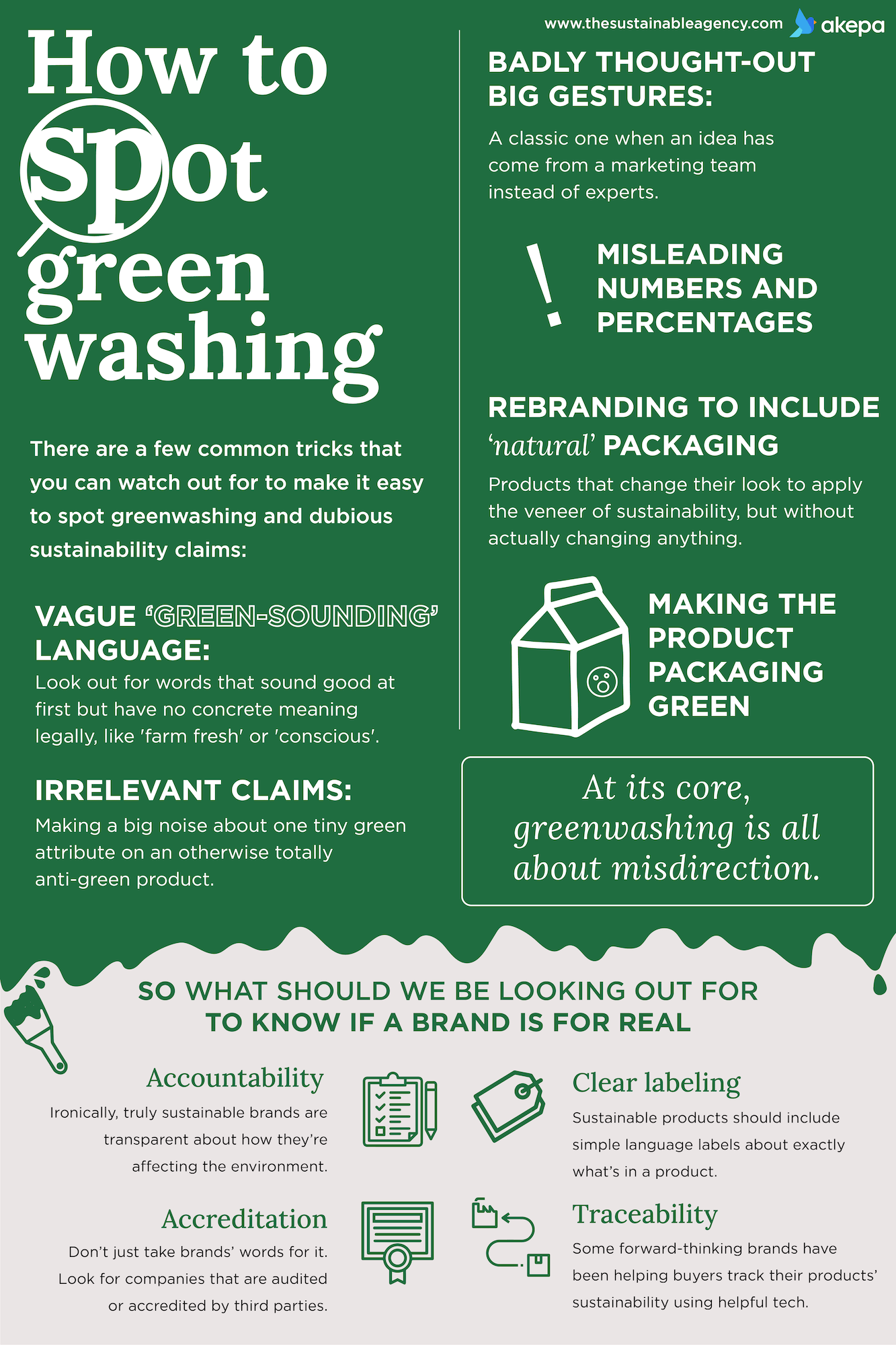
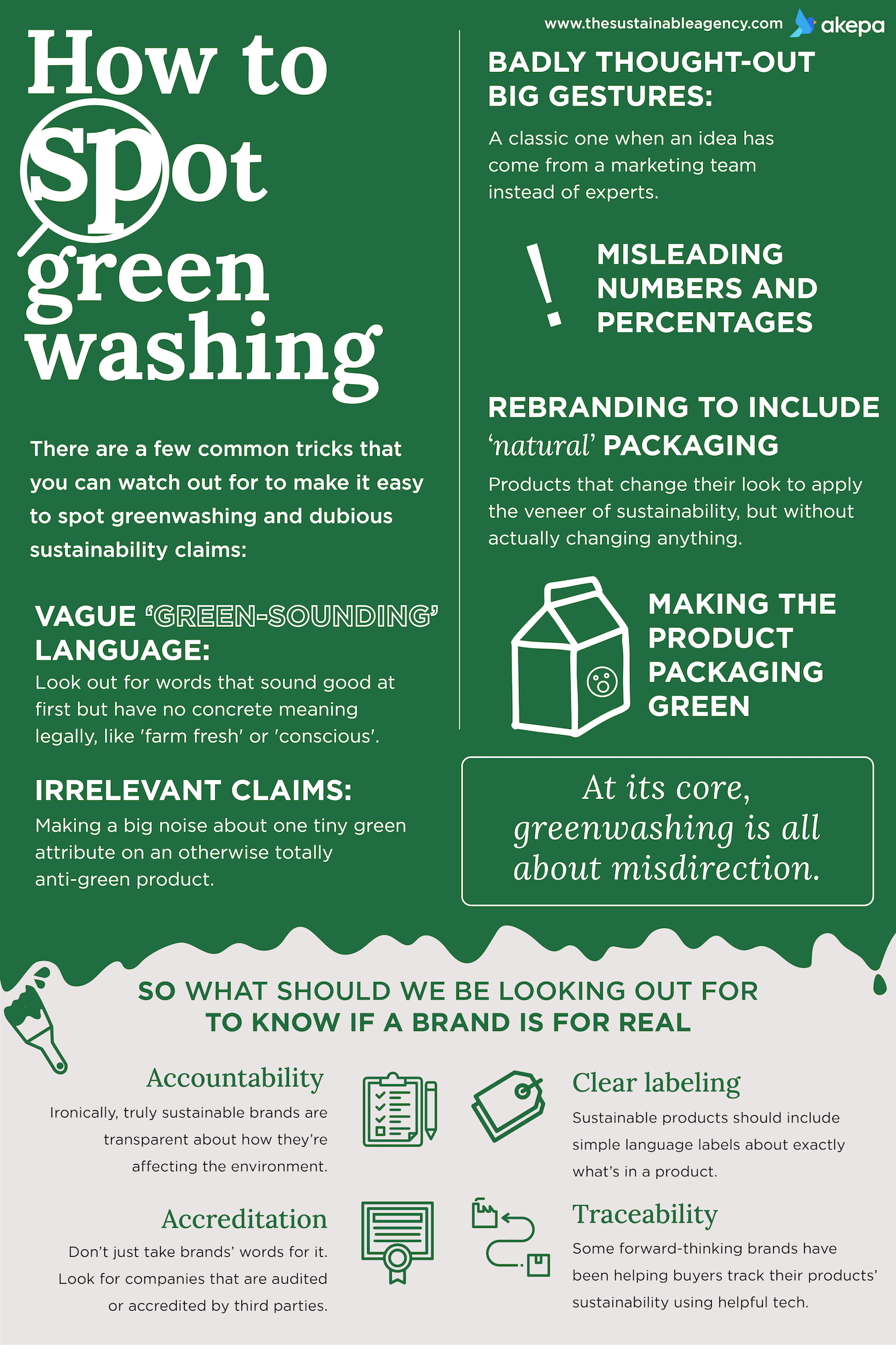
1. Vague Language & Buzzwords
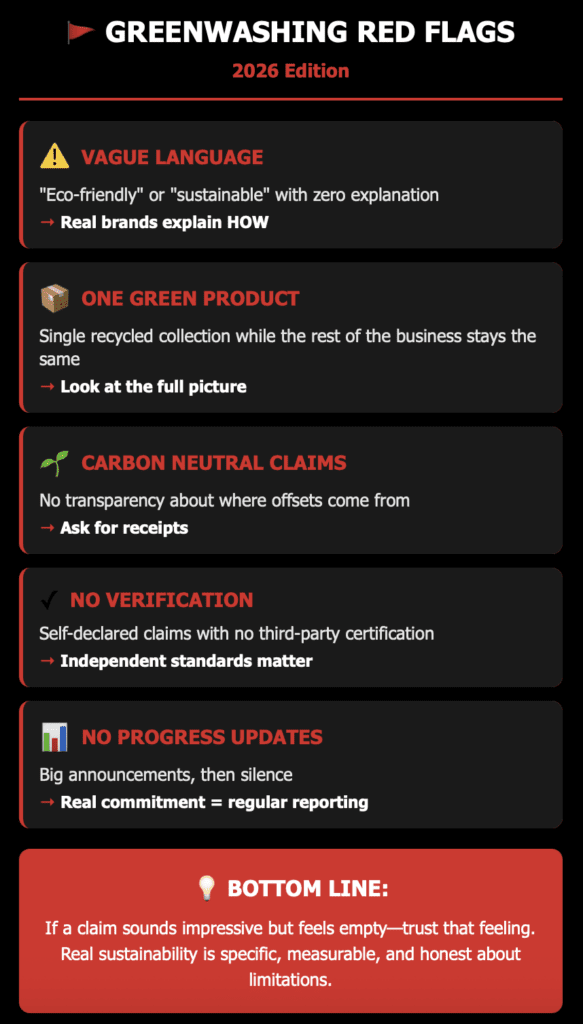
This is the bread and butter of greenwashing. Think words like ‘natural,’ ‘eco-friendly,’ ‘green,’ ‘sustainable,’ ‘earth-friendly.’ What do they actually mean? Nothing, without specifics. A product can be ‘natural’ but still terrible for the environment. ‘Eco-friendly’ could mean it uses slightly less plastic in its packaging. It’s all designed to sound good without committing to anything concrete. Look for the specifics, always. What makes it eco-friendly? Quantify it.
2. The Hidden Trade-off
This tactic highlights one small green aspect of a product while ignoring larger, more significant environmental issues. For example, a company might brag about using recycled materials in their furniture, but fail to mention that the wood comes from endangered forests or that the manufacturing process is incredibly energy-intensive and polluting. It’s like saying your gas-guzzling SUV is ‘eco-friendly’ because it has recycled floor mats. Yeah, right. This is a classic misdirection technique.
3. Lack of Proof or Third-Party Verification
Any company can claim to be green. But can they back it up? If a brand makes a bold environmental claim, they should be able to provide evidence. Where’s the data? Where are the certifications from reputable, independent organizations? If they say their product is ‘biodegradable,’ show me the proof. If it’s just a bald assertion with zero backing, it’s a huge red flag. Credible certifications matter.
Think about it: if you claim to be a great cook, you don’t just say it. You show people your amazing dishes. Companies need to show us their green credentials. Without verification, it’s just hot air. This lack of substantiation is a massive warning sign.
4. Irrelevant Claims
Sometimes, companies will make a green claim that is technically true but completely unimportant or unhelpful to consumers seeking greener options. A classic example is advertising a product as ‘CFC-free.’ Sounds good, right? Except CFCs have been baed by law for decades. So, claiming your product is CFC-free is like bragging that your car doesn’t have leaded gasoline. It’s meaningless. It’s a hollow environmental boast.
It’s like a restaurant advertising their burgers are ‘asbestos-free.’ Duh. We expect that. These claims distract from the actual environmental impact of the product or service. They prey on the assumption that consumers aren’t paying close enough attention.
5. The Lesser of Two Evils
This is when a product might be slightly greener than other options in its category, but the category itself is inherently unsustainable. Think of ‘eco-friendly’ pesticides or ‘fuel-efficient’ SUVs. While they might be marginally better than their counterparts, they still contribute to environmental problems. Promoting them as genuinely ‘green’ is a form of greenwashing. It suggests a solution where there isn’t one, just a less bad option. This is a particularly insidious form of environmental deception.
It encourages continued consumption of harmful products by providing a false sense of environmental responsibility. It’s a clever way for industries with a significant negative footprint to appear to be making progress without fundamentally changing their practices.
Source : thesustainableagency.com
6. Outright Lying / Fibbing
The most blatant form. This is when a company makes a false environmental claim that is simply untrue. They might claim a product is organic when it’s not, or that a factory meets certain emission standards when it doesn’t. This is not just misleading; it’s outright fraud. This is where regulatory bodies tend to step in, but often only after the damage is done. This is the boldest form of deception.
This can range from fudging data to outright fabricating certifications. Remember the Volkswagen ‘Dieselgate’ scandal? They deliberately programmed their cars to cheat on emissions tests. That wasn’t just greenwashing; it was criminal. We have to be vigilant for these outright falsehoods.
7. The ‘Worshiping False Gods’ Strategy
This involves promoting a single, often minor, green attribute while ignoring other more significant environmental issues. Companies might heavily advertise their use of renewable energy for their offices, but completely neglect the massive carbon footprint of their actual product manufacturing or global supply chain. It’s a focus on the positive, to the exclusion of everything else.
It’s like bragging about having a solar-powered light bulb in your house while your factory spews toxic waste into the river. The single positive action is true, but it’s used to distract from the much larger, more damaging environmental impact elsewhere. It’s a selective presentation of facts.
Real-World Examples of Greenwashing to Watch Out For
Theory is one thing, but seeing it in action? That’s what really drives the point home. Let’s look at some classic (and not-so-classic) examples that should make you raise an eyebrow.
Fashion Forward? Or Just Faking It?
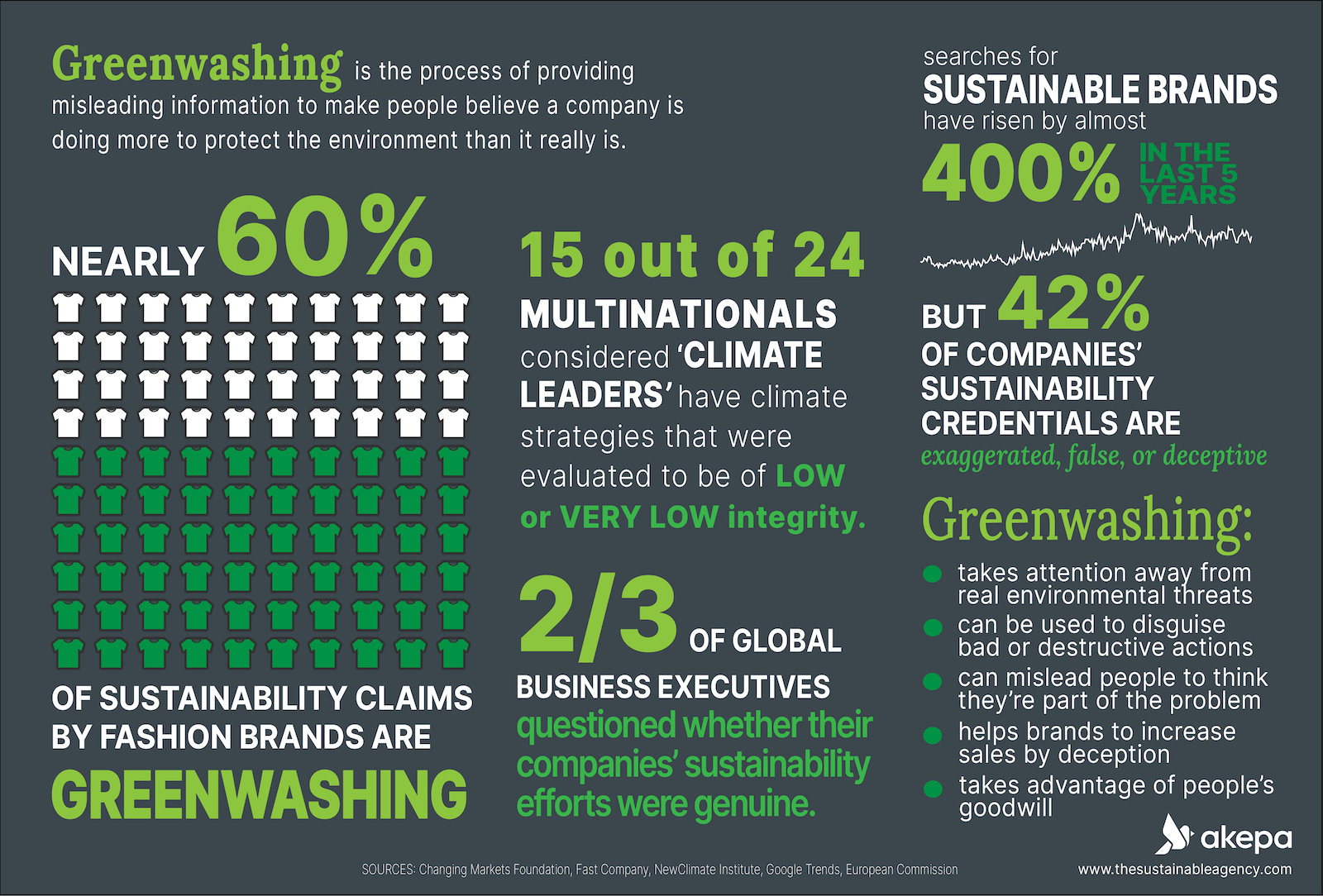
The fashion industry is a hotbed for greenwashing. Brands jump on the ‘sustainable fashion’ bandwagon, but what does that even mean? Often, it’s about a ‘conscious collection‘ made from a tiny percentage of recycled material, while the rest of their massive output remains fast fashion’s environmental nightmare. They’ll use terms like ‘eco-friendly fabrics’ without specifying what they are or how they’re produced. It’s a fashion industry facade.
Think about those brands that suddenly release a small ‘eco’ line. It’s often a fraction of their overall production. They want you to feel good about buying any of their stuff, even if 99% of it is still contributing to landfill waste and pollution. It’s a smart marketing move for them, a deceptive one for us.
The Energy Sector’s Green Glow-Up
Fossil fuel companies often try to rebrand themselves as ‘energy companies’ focused on renewables. They’ll run ads with beautiful shots of wind turbines and solar panels, subtly implying they’re leading the charge. But dig a little deeper, and you’ll find their core business is still oil and gas. The investment in renewables might be a tiny fraction of their overall spending. It’s a classic fossil fuel rebranding.
They want you to associate them with clean energy, to soften their image. But their primary business remains the primary driver of climate change. It’s a masterful play on words and imagery, designed to buy them time and goodwill while they continue their primary, polluting activities. Remember, look at their investments, not just their ads.
Food and Beverage: Naturally Deceptive?
Source : elexyfy.com
Food companies love to use terms like ‘natural,’ ‘wholesome,’ and ‘farm-fresh.’ A cereal box might show a lush green field, but the cereal itself is packed with sugar and processed ingredients, and the ‘natural flavors’ are anything but. Or a bottled water company might talk about ‘protecting the watershed’ while using tons of plastic and shipping water across the country. It’s about evoking nature without the substance.
Look for overly simplistic imagery and vague claims. Does ‘natural’ mean anything legally? Often, not much. Are they highlighting one ‘sustainable’ farming practice while ignoring the massive water usage or pesticide reliance? Be skeptical of these pastoral scenes. They’re often a distraction.
The Tech World’s Eco-Ambitions
Even tech companies aren’t immune. They’ll talk about using recycled materials in their gadgets or having ‘carbon-neutral data centers.’ Great. But what about the e-waste problem? The plaed obsolescence? The energy required to manufacture these devices in the first place? Often, the focus on one small positive aspect distracts from the bigger, more problematic environmental footprint of the entire tech lifecycle.
Companies might trumpet their use of recycled aluminum in a phone. Fine. But what about the energy-guzzling mining operations for other rare earth minerals? What about the plaed obsolescence that forces you to upgrade every two years, creating mountains of waste? It’s a complex environmental issue, not just a single component.
Travel and Tourism’s ‘Eco’ Adventures
Sustainable tourism is a growing market, and you know what that means: greenwashing opportunities. Hotels might claim to be ‘eco-friendly’ because they have reusable towels. Airlines might tout their carbon offset programs. But these actions often pale in comparison to the massive environmental impact of travel itself. It’s about making you feel good about your flight, not actually fixing the problem. This is a tourism sector illusion.
Are they really committed to conservation, or are they just asking you to pay a small fee to offset the enormous carbon emissions of your flight? Are they working with local communities in a truly equitable way, or just using ‘eco-tourism’ as a marketing buzzword? Ask the tough questions.
How to Become a Greenwashing Detective in 2026
Okay, enough with the bad news. How do you actually protect yourself and make informed choices? It’s not rocket science. It just takes a little effort and a healthy dose of skepticism. Think of yourself as a detective. You’re looking for clues.
1. Read the Fine Print (Seriously!)
That beautiful, glossy packaging? It’s often hiding the truth. Don’t just glance at the big ‘eco-certified’ logo. Read the labels. Look for specific ingredients, manufacturing processes, and certifications. If a claim is vague, it’s probably hiding something. The details are where the truth lies, or at least, where the deception is revealed. Fine print matters.
Companies that are genuinely proud of their environmental efforts will be transparent about it. They’ll spell it out. If it’s buried in jargon or requires a magnifying glass to read, they’re probably not that proud of it.
2. Question Vague Claims
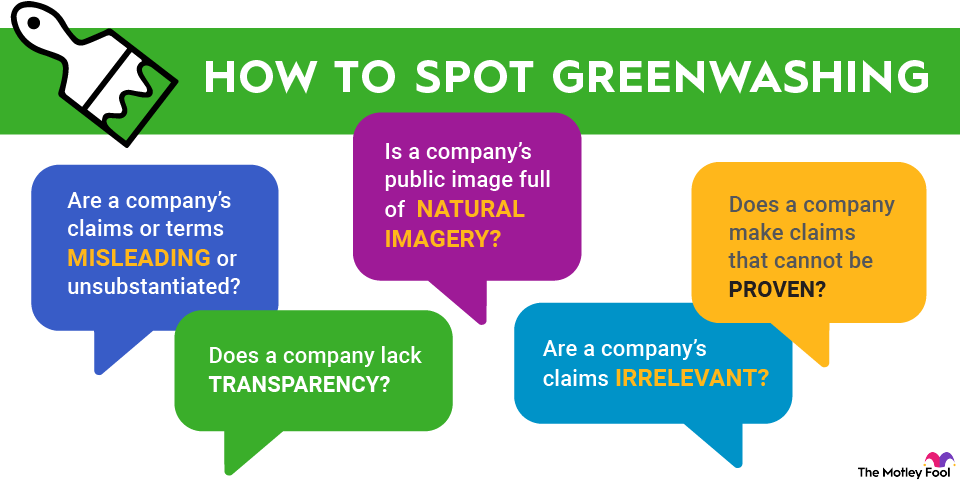
As we’ve seen, words like ‘natural,’ ‘green,’ and ‘sustainable’ are often meaningless on their own. Ask yourself: What specifically makes this product or company ‘green’? If the company isn’t providing clear, measurable answers, run. Or at least, be very wary. Don’t accept platitudes. Demand data. This is your right as a consumer.
Source : fool.com
If a brand says their packaging is ‘recyclable,’ ask: Is it widely recyclable in my area? What percentage is recycled content? If they say they’re ‘reducing waste,’ ask: By how much? Compared to what baseline? Vague claims are the easiest to make and the hardest to disprove.
3. Look for Actual Certifications
Real environmental certifications from reputable third-party organizations are your best friends. Look for labels like USDA Organic, Fair Trade Certified, Energy Star, Forest Stewardship Council (FSC), or B Corp certification. These certifications mean a company has met stringent standards and has been independently verified. Third-party validation is key.
But be careful! Even certifications can be greenwashed if the organization isn’t truly independent or if the standards are weak. Do a quick search on the certification itself. Is it legitimate? Does it cover the specific claims being made? Don’t just trust a logo; understand what it represents.
4. Research the Company’s Overall Practices
Don’t just look at the product; look at the company. What are their overall environmental policies? Do they have a history of environmental violations? What do independent environmental groups say about them? Use the internet! A quick search can reveal a lot. Check out places like the Sustainable Agency’s blog for examples or look at reports from environmental watchdog groups. It’s about the bigger picture.
Is the company investing heavily in polluting industries while promoting one small green initiative? Are they transparent about their supply chain and carbon footprint? Are they lobbying against environmental regulations? These broader actions tell a much more honest story than a single product claim.
5. Be Wary of Scare Tactics and Emotional Appeals
Some greenwashing relies on making you feel guilty or scared about environmental issues, then presenting their product as the easy solution. They might use dramatic imagery or language to create a sense of urgency, pushing you to buy without thinking critically. Emotional manipulation is a common tactic.
If a brand’s marketing feels overly dramatic or guilt-trippy, take a step back. Are they appealing to your emotions rather than providing factual information? Genuine environmental solutions are built on science and data, not fearmongering.
6. Check for Specificity and Data
This ties into questioning vague claims. Truly sustainable companies will provide specific data. Instead of ‘We reduced our carbon emissions,’ they’ll say ‘We reduced our carbon emissions by 15% in 2025 compared to our 2020 baseline.’ Instead of ‘Made with recycled materials,’ they’ll say ‘Made with 75% post-consumer recycled plastic.’ Data speaks louder than words.
Look for reports, impact statements, or sections on their website dedicated to sustainability metrics. If it’s all fluff and no figures, be suspicious. Concrete numbers show commitment and transparency.
7. Follow the Money
Watch: Greenwashing Exposed: Tricks & Real Examples of Corporate …
Where does the company invest its profits? Are they pouring money into developing sustainable technologies, or are they doubling down on fossil fuels? Sometimes, the best indicator of a company’s true priorities is where their financial resources are directed. This is a crucial financial indicator.
Think about it: if a company truly believed in a green future, wouldn’t a significant portion of their R&D and capital expenditure be focused there? If their primary investments remain in environmentally damaging sectors, their ‘green’ marketing is likely just a PR move.
8. Trust Your Gut (But Verify!)
Sometimes, a marketing campaign just feels off. It’s too good to be true, or it seems like they’re trying too hard. While gut feelings aren’t evidence, they are a good starting point for further investigation. If something smells fishy, do a little digging. This is your consumer intuition.
Don’t dismiss that nagging feeling. Use it as a cue to ask more questions, do more research, and check for those certifications and data points we talked about. Your intuition, backed by facts, is a powerful tool.
The Future of Marketing: Authenticity Over Greenwashing
Look, the tide is turning. Consumers are getting fed up. Regulators are starting to pay attention. The era of easy greenwashing is numbered. Brands that continue to rely on vague promises and misleading claims will eventually face backlash, boycotts, and significant reputational damage. It’s just not sustainable. Get it? Sustainable!
The real wiers in 2026 and beyond will be the companies that embrace genuine sustainability, transparency, and honesty. They’ll be the ones who can back up their claims with real data, measurable impact, and third-party verification. They’ll be the ones who see environmental responsibility not just as a marketing angle, but as a core part of their business. This is the future of ethical marketing.
So, be a savvy shopper. Be a critical consumer. Demand better. Call out the greenwashers. Support the real deal. Together, we can push for a marketing landscape that’s as green as it claims to be. It’s time for authenticity to win. Remember, even wellness trends can fall prey to misleading claims; just check out how to avoid greenwashing in wellness for another angle on this.
Frequently Asked Questions
-
What's the quickest way to tell if a company is greenwashing?
The quickest way? Look for vague language. If they’re using feel-good words like ‘eco-friendly’ or ‘natural’ without any specific data or certifications to back it up, that’s a massive red flag. Vague claims are suspicious. Real sustainability is specific.
-
Are 'all-natural' labels always trustworthy?
Honestly, not really. ‘All-natural’ is often a meaningless marketing term. It can mean a lot of things, or nothing at all, from a regulatory standpoint. A product can be ‘natural’ and still harmful to the environment or your health. Always look for specific ingredient lists and actual certifications beyond just ‘natural’.
-
What should I do if I suspect a company is greenwashing?
First, don’t buy it! Second, do your research. Check for third-party certifications, look for data on their website, and see what watchdog groups or news outlets say about them. You can also report misleading advertising to consumer protection agencies. Your vigilance helps hold companies accountable.
-
How do I know if a 'green' certification is legitimate?
That’s smart thinking. Do a quick search on the certification itself. Is it from a well-known, independent organization? Does it have rigorous standards? Look for certifications like USDA Organic, Fair Trade, or Energy Star. Be wary of obscure or self-created ‘certifications.’ Legitimate certifications are transparent.
-
Can small businesses really afford to be truly sustainable, or are they likely to greenwash?
It’s a tough balance, for sure. Some small businesses genuinely strive for sustainability within their means, focusing on local sourcing or minimal waste. But others might use the ‘small business’ and ‘local’ appeal to mask weak environmental practices. Always look for transparency and any available certifications, regardless of company size. Authenticity matters, big or small.